In this article:
- Elon's Neuralink Update for 2026
- VOICE Trial - Restoring Speech
- Newest Patient Stories
- Elon Discussing Robot Surgeons
- Mr. Beast Talking Neuralink
- Talking to Animals
- Sam Altman's Brain-Interface Company: Merge Labs
- Meta's Metaverse Plans
- BCI Competitor Partnership
Elon's Neuralink Update for 2026
Let's start with this exciting post from Elon saying:
Scaling up to high-volume production has been the goal since the company was started in 2016.
This is not an actual Neuralink factory, but just wanted to give an idea of what it's like and how the scale could look if it were increased several times over.
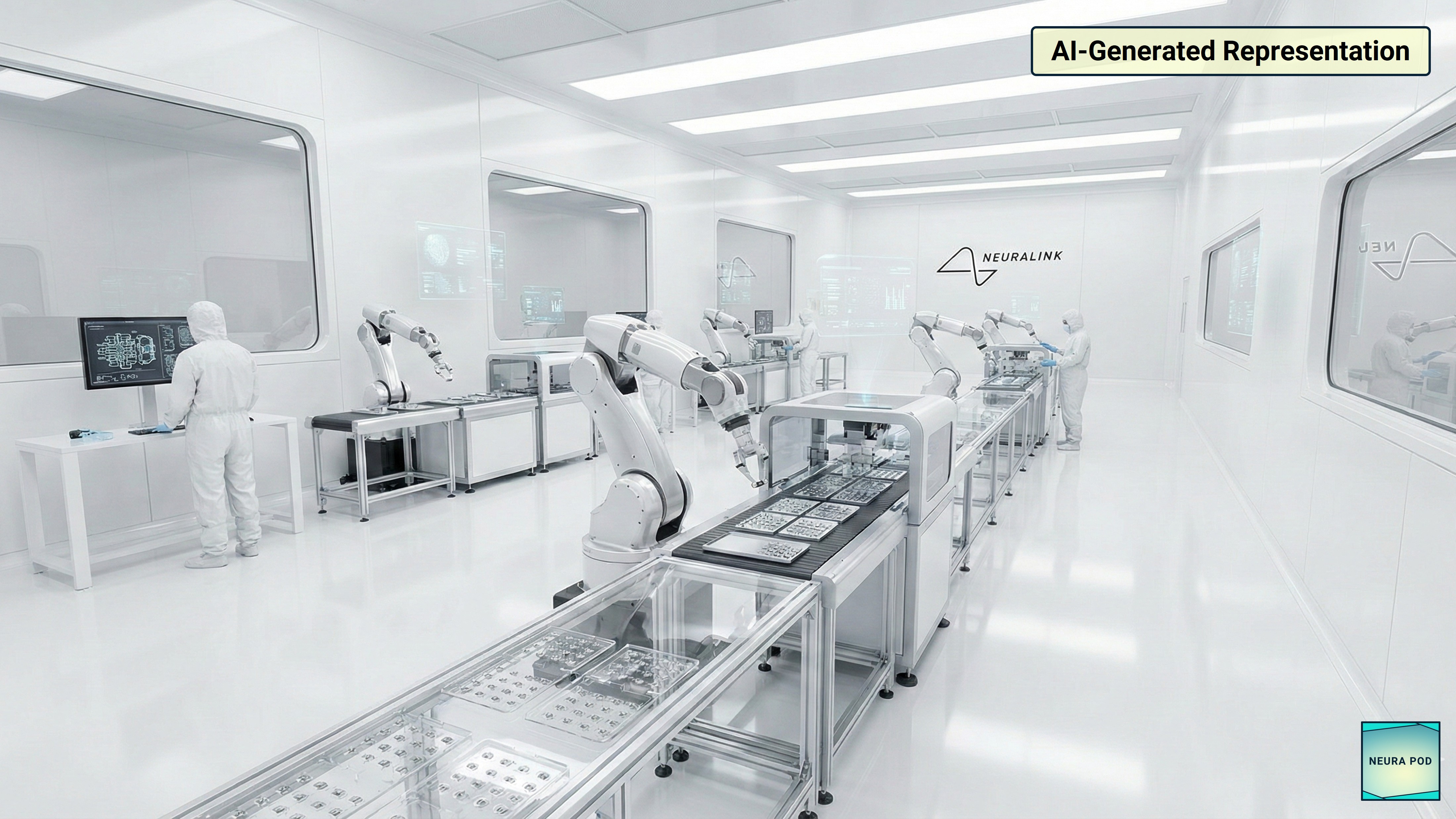
They're now at the point of really ramping up, which aligns quite well with the expansion of the 144,000 sq ft expansion in South San Francisco, alongside the very large presence in Austin, Texas as well.
The next point Elon made is the streamlined, almost entirely automated surgical procedure. This aligns well with this 16-second clip from DJ's presentation in the Fall:
10:30 - 10:46: https://youtu.be/QJdgHXyJh7M?si=x0f01qYgIrWZRZdN&t=630
Then automating the entire surgery would be a huge improvement as the surgery currently takes several hours. If the entire process could be automated, there are several major advantages.
I even asked AI what these advantages would be and Grok said: Greater precision and consistency, reduced surgical risks and complications like less tissue damage or trauma, lower infection risks, less inflammation, a shorter procedure time leading to less time under anesthesia, faster recovery and discharge, increased scale, lower costs, and more accessibility, potentially to underserved regions.
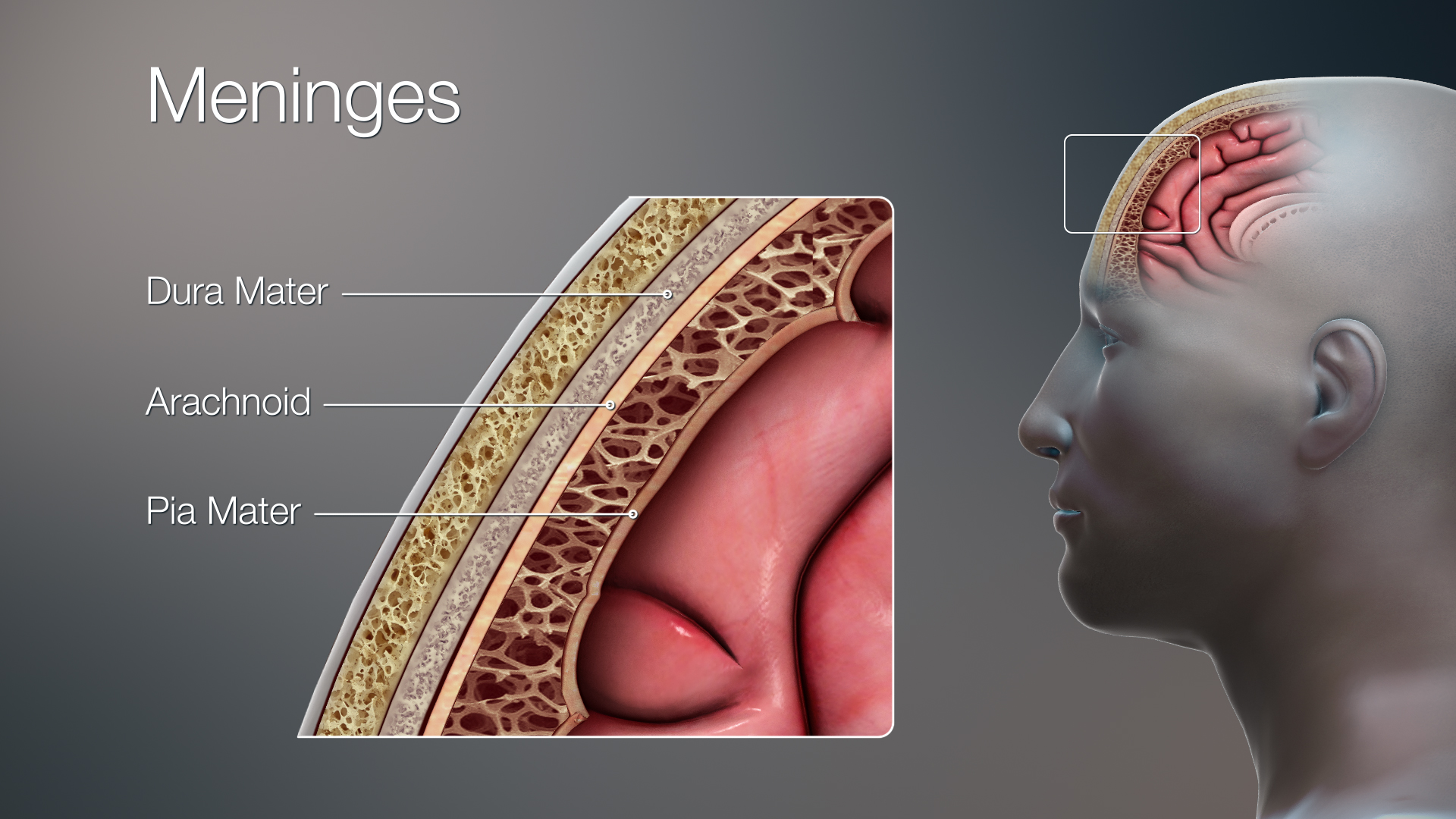
And the last piece Elon shared is that the device threads will go through the dura, without the need to remove it. This is a big deal for many of the same reasons I just listed, but take a look at this quick diagram I generated using AI- it's not perfect, but I love that we can have these simple visualizations ready in seconds.
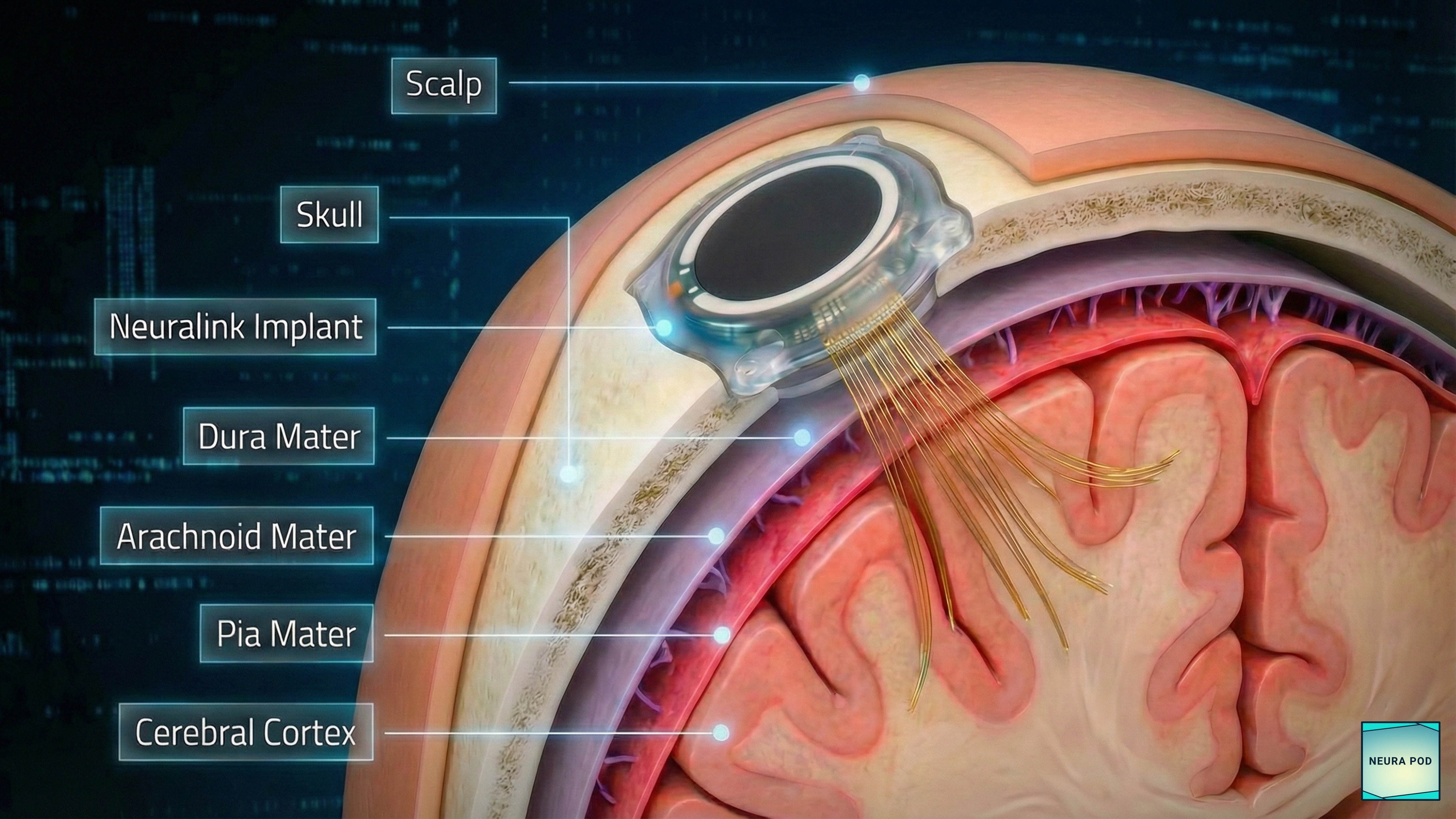
Now take a look at this image where you can see the dura mater is a fairly thick layer, so by being able to stick the metal threads through that layer, without having to cut it open, the infection risk and risk of complications is reduced. I'm personally thankful that such a great team is working nonstop to improve the surgical process.
So with the team at a little over 20 patients now, do you think we'll see 100 patients this year? Let's talk about what the newest human trial study is:
VOICE Trial - Restoring Speech
Neuralink's VOICE study is giving back a voice to those who have lost it. At least 2 patients now have this implant! This is nuts. I mean, Neuralink is insane to begin with, but isn't this incredible that the team can just stick some metal wires in the brain and understand what someone wants to say?!
The surgery was done in the speech motor cortex region of these patients and the implant decodes the brain signals to produce the words the users would like to speak.
In other words, this is direct brain-to-voice communication, bypassing the mouse and keyboard altogether.
Now this may sound similar to the implant Brad Smith got. Brad is Neuralink's 3rd patient. Due to the progression of his ALS, he's unable to speak. But because of advancements in AI, he has been given a voice in a slightly different way.
Brad's Neuralink is decoding his intended physical movement. So he uses his implant to move a mouse to click keys on an on-screen keyboard.
Once he begins typing, Grok generates auto-completed phrases and sentences he can select from. The audio then gets generated by an AI platform called ElevenLabs and vocalizes the sentences he creates.
So these are both game-changing implants that achieve a similar result, but the VOICE study patients should be able to speak much more clearly and quickly very soon, if not already.
https://clinicaltrials.gov/study/NCT07224256
According to the clinical trials website, the study is recruiting at UT Southwestern Medical Center in Dallas, Texas. It's aimed at adults aged 22-75 with conditions like ALS, PLS, stroke, or spinal cord injury that cause severe speech and upper limb impairment.
Newest Patient Stories
Now, for some inspiring patient updates:
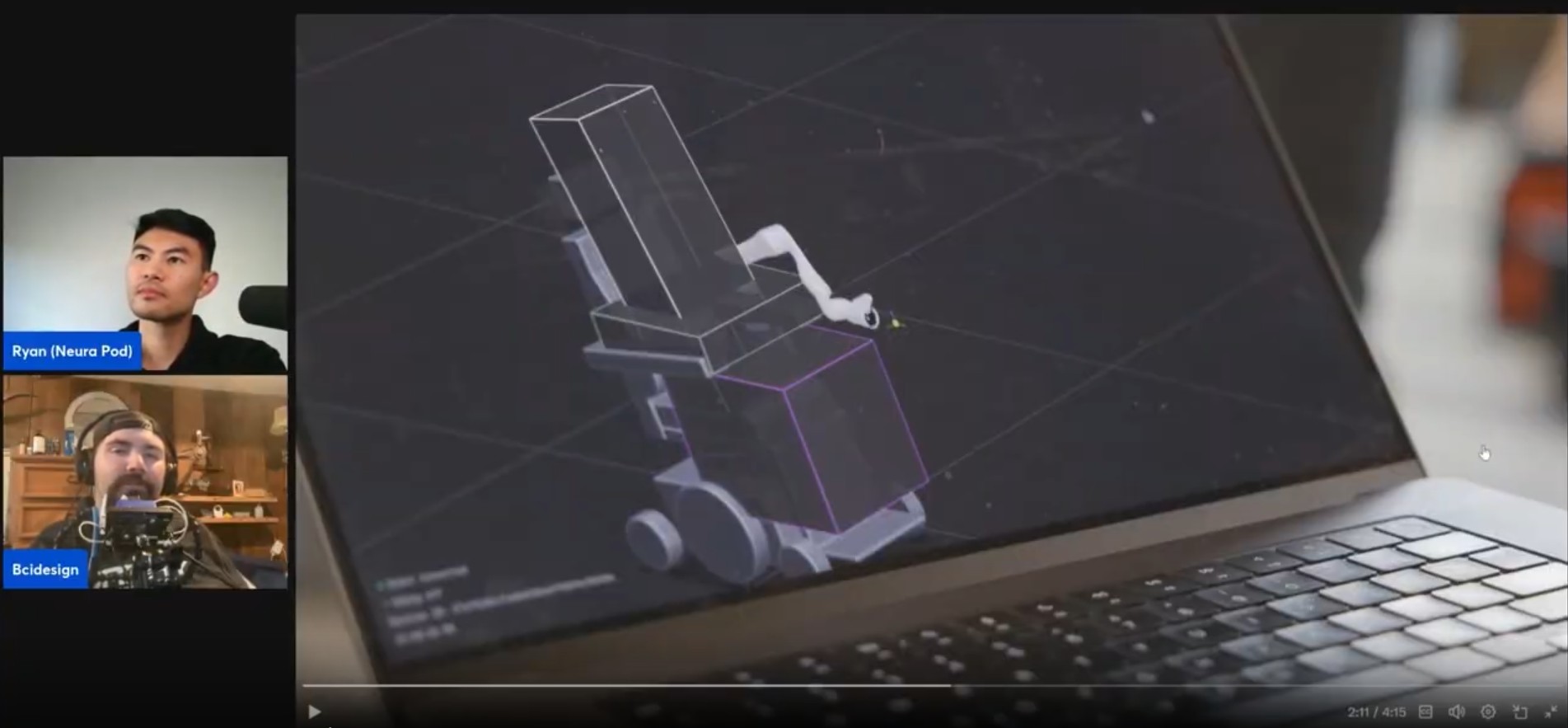
I sat down with Alex, the 1st patient to control an assistive robotic arm via his Neuralink, and he showed me how the Neuralink team worked with him to fine tune the control and the safety zones for where the arm could move. You can check out that full interview on my channel.
And then Neuralink's first overall patient, Noland recently shared this:
Then a UK Neuralink patient, Jon shared this:
Elon Discussing Robot Surgeons
Then Elon elaborated on robot surgeons in his recent interview with the ever-optimistic Peter Diamandis. Check out this clip:
01:27:35 - 01:27:56: https://youtu.be/RSNuB9pj9P8?si=kq4Z4z8JaZfIGoIw&t=5255
Peter: "When do you think Optimus will be a better surgeon than the best surgeons? How long for that?"
Elon: "3 years."
Peter: "3 years? Okay."
Elon: "I would say 3 years *at scale*. There will probably be more Optimus robots that are great surgeons than there are all surgeons on Earth."
Many takeaways here- Elon is super Optimus-tic, as usual. Optimus is incredibly underrated- it's basically a physical version of the AI models we use today. We can just prompt it and the robot will do what we need. On top of that, Tesla's manufacturing expertise means they can scale this. And as Elon has said many times in the past, the goal is to have the robot perform the entire surgery. Potentially, Neuralink's surgical robot will shift from the former R1 to the current Rev10 to the future Optimus surgeon.
Then Elon went on to add more context for why this is clearly the right approach:
01:32:46 - 01:33:21: https://youtu.be/RSNuB9pj9P8?si=qlTNmmq_3E7d_rzk&t=5566
"Like LASIK for example, where the robot just lasers your eyeball. Now do you want an ophthalmologist with a hand laser? (laughs) It's a little shaky. I wouldn't want the best ophthalmologist with even the steadiest hand out there, with a fucking hand laser on my eyeball. It's gonna be like that. It's like do you want an ophthalmologist with a fucking hand laser or do you want the robot to do it and actually work?"
Mr. Beast Talking Neuralink
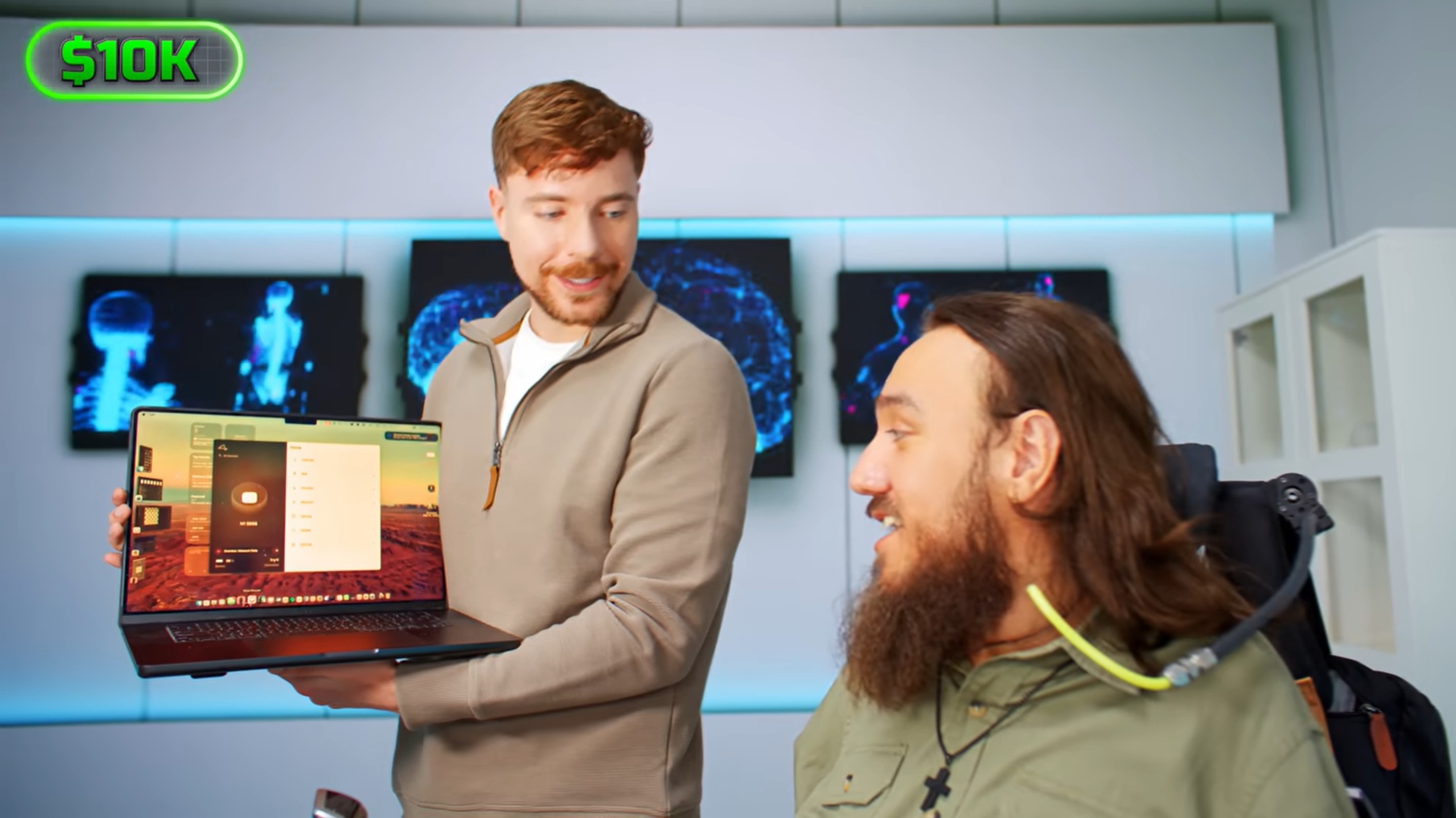
Then the biggest creator in the world, Mr. Beast dedicated a segment to Neuralink on his latest video about futuristic tech. Noland Arbaugh, Neuralink's first patient played Mario Kart with him here:
https://www.youtube.com/watch?v=pAnGwRiQ4-4
I'm very happy that this happened. Mr. Beast is doing a lot of great things for the world and for a creator of his size to discuss and support this futuristic technology is not only good for raising awareness, but also demonstrates he uses his platform for good.
Talking to Animals

And then we have this humorous viral post from X earlier this month of someone claiming it's possible to understand what birds are saying.
Now whether this is a parody post or not, Neuralink is already decoding human thoughts and restoring communication for people who can't move or speak. So down the road, what would prevent them from doing this in animals. Even if neuroscientists aren't able to do this today, Neuralink could be the tool that unlocks this capability. How cool will it be to understand what your dog actually wants!
Also, if you liked that first image of the dog and want to learn how to use AI tools that can generate great images or turn bland product pictures like this:

Into images like this:

Grab my free mini-course on AI video and image generation at:
https://www.simpleaiprompts.com/
Sam Altman's Brain-Interface Company: Merge Labs
Then, right on cue, we have confirmation of Sam Altman of OpenAI leading the newly announced brain-computer interface company, Merge Labs. And I say right on cue because there are very few industries that are going to be hotter during the next five years.
Let's take a look at their opening blog post. They say:
"Meet Merge Labs – a research lab with the long-term mission of bridging biological and artificial intelligence to maximize human ability, agency, and experience."
They go on to add:
"We believe this requires increasing the bandwidth and brain coverage of BCIs by several orders of magnitude while making them much less invasive. To make this happen, we’re developing entirely new technologies that connect with neurons using molecules instead of electrodes, transmit and receive information using deep-reaching modalities like ultrasound, and avoid implants into brain tissue. Recent breakthroughs in biotechnology, hardware, neuroscience, and computing made by our team and others convince us that this is possible."
So they're taking a less invasive ultrasound approach to getting information from and sending information to the brain.
Not only is AI blasting off like a rocket, but medical and neurotechnology startups are being funded left and right. Every major tech company, think Apple, Google, Meta, Microsoft, and more are going to be investing aggressively or they'll simply be left behind. Which is interesting to think about with these next topics:
Meta's Metaverse Plans
Remember Mark Zuckerberg began building out the infrastructure for a big bet on the metaverse? Some of that has now slowed down as Meta recently made cuts to the department:
This article by the Verge states:
https://www.theverge.com/tech/863209/meta-has-discontinued-its-metaverse-for-work-too
Two months before it changed its name to “Meta,” Facebook CEO Mark Zuckerberg personally introduced us to his metaverse for work: Horizon Workrooms, envisioned as a virtual space for workers to collaborate. Today, the company announced it’s shutting that space down: “Meta has made the decision to discontinue Workrooms as a standalone app, effective February 16, 2026,” reads the note tucked away on a help page.
Meta will also no longer sell its headsets and software as a service for businesses, another help page reads: “We are stopping sales of Meta Horizon managed services and commercial SKUs of Meta Quest, effective February 20, 2026.”
Meta just laid off roughly 10 percent of its entire Reality Labs division, over 1,000 jobs. In the aftermath, it’s becoming increasingly clear that Zuckerberg has changed his mind about what the word “metaverse” actually means. Mobile yes, smart glasses yes, but maybe not VR.
So the Meta Ray-Ban AI glasses are sticking around, but doesn't it seem inevitable that Meta, Apple, and Google will eventually cave and build an invasive brain-interface? Speaking of which, a current BCI startup is working on that:
BCI Competitor Partnership
A Neuralink competitor, Precision Neuroscience has partnered with one of the largest medical technology companies in the world, Medtronic.
According to this recent press release,
"Medtronic will integrate Precision Neuroscience’s Layer 7 cortical interface with its StealthStation surgical navigation system."
Basically this means this collaboration will help them perform surgeries more precisely, something that Neuralink is able to do on their own as they are quite vertically integrated.
Subscribe if you liked this update and check out this article where I break down the costs of a Neuralink implant.
Thanks for reading, and Happy New Year!