- Careers page overhaul: implant, surgical robot, and neural foundation models
- Audrey, Patient P9, creating art with her mind in the PRIME trial
- Brad's ALS speech, Ice Bucket Challenge, Grok Bot, skull drill, and 27+ patients
In this August 2026 Neuralink update I cover the overhaul to the careers page on neuralink.com, the latest official post about creating art with her mind, clips from my visit to a speech by Neuralink's first ALS patient, Elon participating in the ALS Ice Bucket Challenge, Neuralink in the context of Grok Bot, a neurosurgeon demonstrating how to drill a hole in the skull, and the latest approximate employee count and social metrics. For prior months, see the May 2026 Neuralink Update, the July 2026 Neuralink Update, and the Neuralink Update for 2026.
Careers Page Overhaul
Next, take a look at the careers page from neuralink.com/careers. The reason this page is so interesting is we can get a sense of what is actually important to the team building these devices. We get to learn what they want new team members to know, feel, and be inspired by.
As we scroll down the page, we can see some inspiring and motivating messages, including the statement that if you join the team, you will work on, "The hardest engineering problems on Earth." That is probably true given that, after all, this is brain surgery we are talking about.
Kinda funny that Elon's other company, SpaceX, is involved in rocket science and engineering. Perhaps they are working on the hardest engineering problems off Earth.
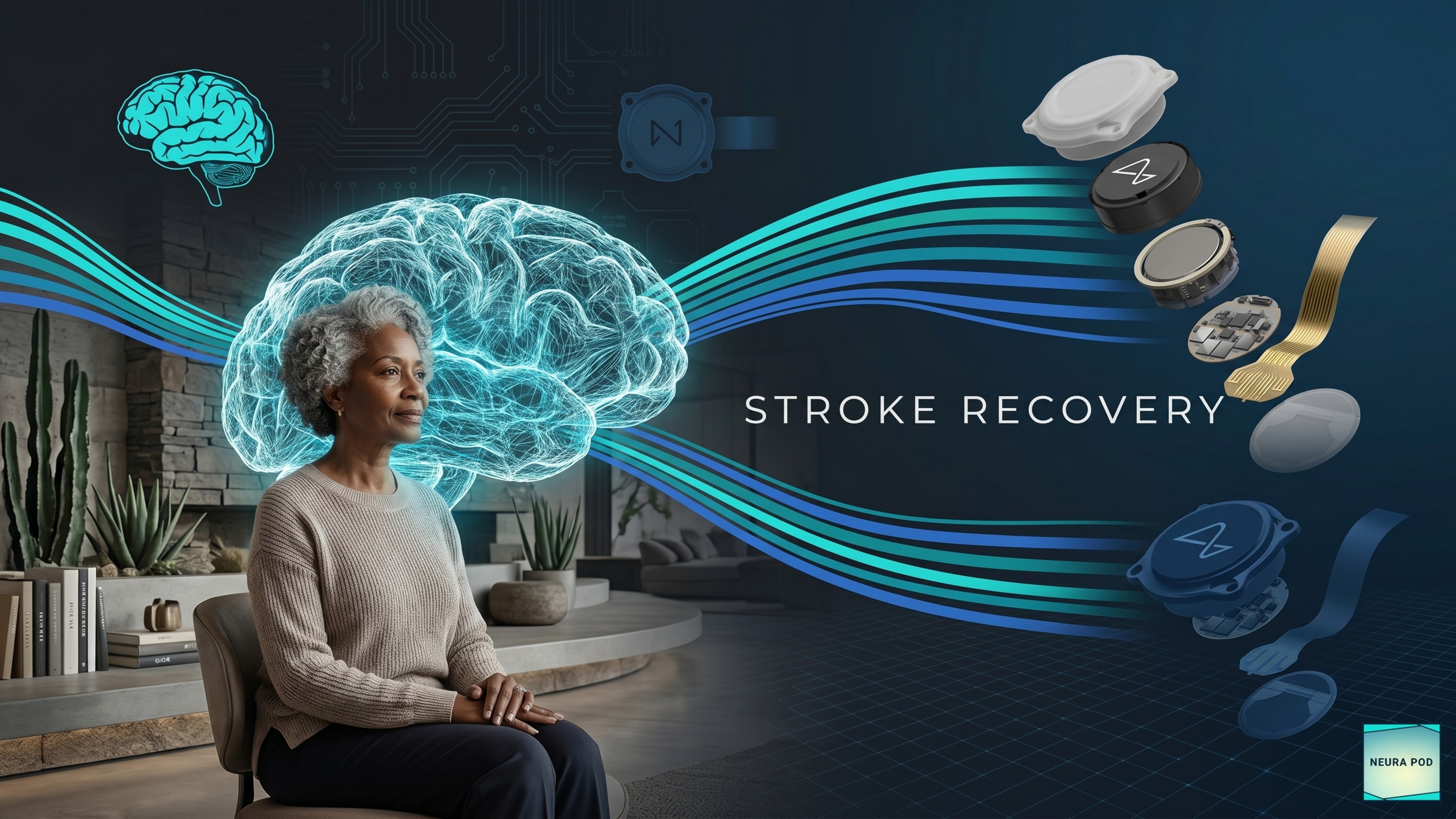
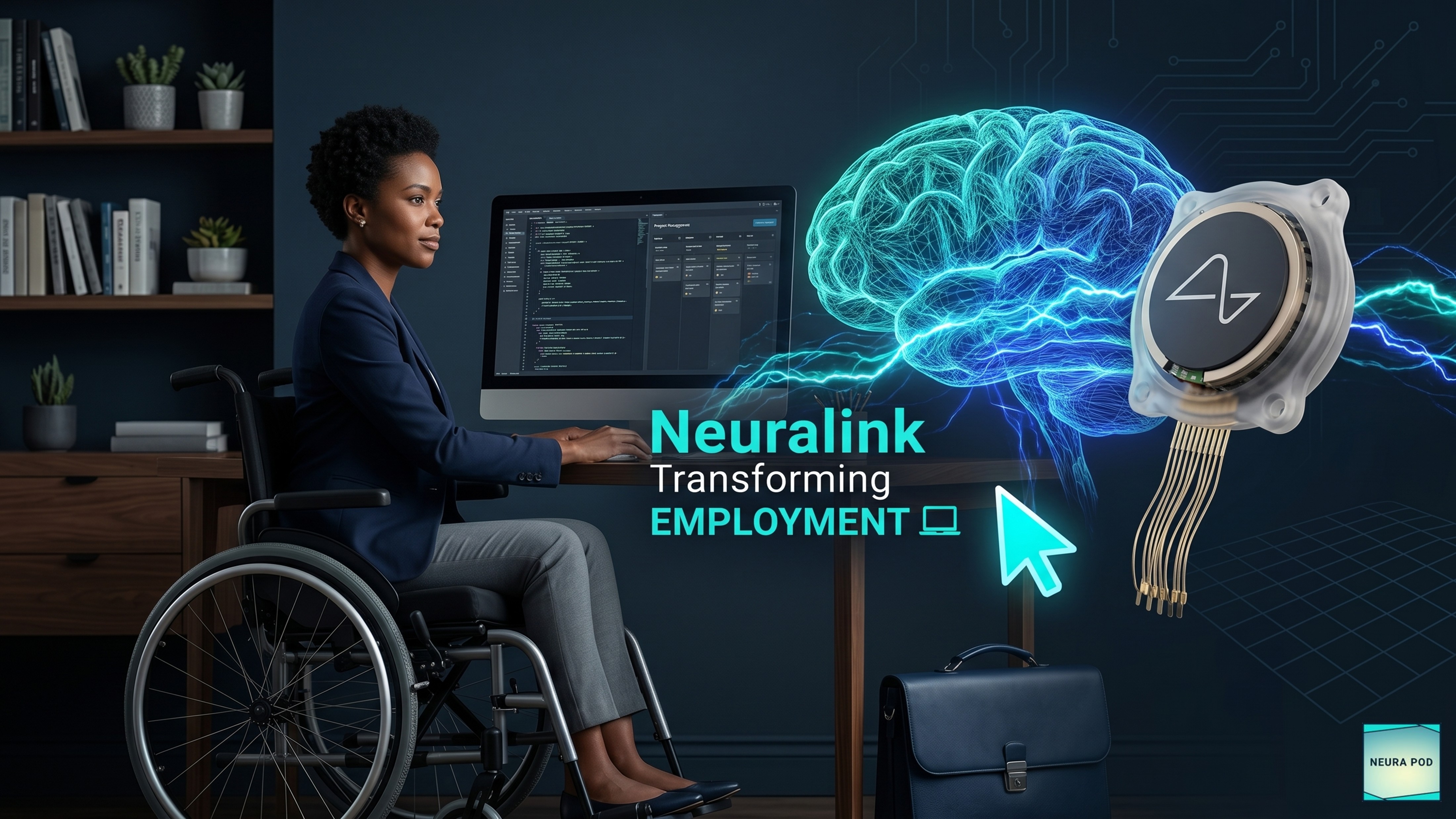
There is a team focused on building the actual implant, and it is cool to see the different components inside the chip package. See also neuralink.com/technology.
First, we have the biocompatible enclosure. This is important for sealing off the electronics and also making sure the brain does not completely reject the implant. It is not easy to make materials that can weather the storm inside the skull. It is quite a salty and humid environment.
Then the battery that gets charged wirelessly, and the chips and electronics that take the electrical signals from the brain and send them via Bluetooth to the Neuralink app. And then of course, the metal threads that actually sense the voltage changes when the neurons fire.
And there is another team focused on building the custom surgical robot that is now helping do the actual patient surgeries.
And then what I believe is the most fascinating element of the long-term potential for Neuralink: they have a section for machine learning that says: "Decode intent in milliseconds. Foundation models that directly decode neural signals instead of text."
This reminds me of this clip from Neuralink President DJ Seo on a recent interview where he discussed the advantage of having lots of brain data at scale. One way to think about this is a fleet of neural implants. Those implants can provide great training data for building something akin to ChatGPT or Grok, but instead of words, it is for actual thoughts in the brain.
"Even at our scale, of 20 or so participants, we're starting to see some interesting results in building you know what's called a neural foundational model where you have these state-of-the-art LLM models or transformer networks that are being fine-tuned with neural data and there's a lot of really interesting patterns and things that it's learning that are very counterintuitive. So I think, you know, being able to think about- and I think again, this is where scale is key."
They're hiring year-round in Austin, Texas, and Northern California. Check out the open positions because you could positively change your life and the lives of millions of others.
Creating Art with Her Mind
Next, we have this post that says: "With Neuralink, Audrey is creating art with her mind."
With Neuralink, Audrey is creating art with her mind. pic.twitter.com/7cip08yq49
— Neuralink (@neuralink) August 26, 2026
On her own personal website, neuraartstudio.com/pages/neuraart-story, she writes that at 16, a spinal cord injury left her paralyzed from the neck down. For over 20 years, she could not type, draw, or interact with the digital world the way she wanted. In July 2025, she became "Patient P9" in Neuralink's PRIME clinical trial. At the University of Miami Health Center, surgeons placed a small chip with 128 threads in her motor cortex, a device that reads her brain signals and turns them into commands a computer can understand.
She writes that she will never forget the moment she used her thoughts to write her name, "Audrey," on a laptop screen for the first time in two decades. She even drew hearts and a slice of pizza. She shared that moment on X, laughing about her progress with a quick "I'm working on it. Lol #Neuralink."
She founded NeuraArt Studio to produce and sell original digital artworks, prints, and merchandise inspired by her Neuralink experiences. Visit NeuraArtStudio.com to explore the gallery. Follow her on X @AudreyCrews for updates.
First ALS Patient Speech
First, I wanted to share some of this speech from Brad. I drove over to a local church here in the greater Phoenix, Arizona metro where they told the audience about their experience with the Neuralink.
For those who don't already know, ALS is a horrible disease of the motor neurons that takes away function like walking, speaking, eating, and even breathing.
Participating in the human trials now will not cure ALS, but Brad's quality of life has improved a lot as a result of the brain implant. In November 2024, he got the surgery and has been using the device to control his computer.
Attending this again made me appreciate the caretakers for anyone who has a severe medical disability.
Ice Bucket Challenge
Next, we have this video of Elon Musk taking on the Ice Bucket Challenge with his kids back in 2014. This clip is from DogeDesigner (@cb_doge), not an official Neuralink post.
Elon Musk taking on the Ice Bucket Challenge with his kids back in 2014 pic.twitter.com/3P9ZGYO4Yc
— DogeDesigner (@cb_doge) August 6, 2026
Great to see Elon spending every moment he can outside of work with his kids, while also raising awareness of this disease.
Neuralink and Grok Bot
Next, the greatest AI product ever released was shipped by SpaceX a few weeks ago. This is relevant to Neuralink because the primary reason Elon and the co-founders started Neuralink in the first place was to minimize the likelihood of super-intelligent AI running away from humans and doing things that we didn't want. See the announcement at x.ai/news/introducing-grok-bot.
Now that we're currently living through the AI Big Bang, it's worth considering how our future is going to look if and when AI continues to progress over the next decade.
I will bring this back to how it relates to Neuralink specifically, but first I have to publicly share how incredible Grok Bot is. Grok Bot is a superintelligent AI teammate. I just message it like a coworker, give it a task and it persists until it figures out how to do the task. For example, I asked it to help me build a replica of the Airbnb website: ryan-tanaka-portfolio.pages.dev/nestly. I told it to build a replica with the core features and functionality, logged in, and made a few fine-tuning adjustments. After less than an hour, this is the site it produced.
It can research, draft emails, update spreadsheets, or run scheduled routines just based off of screen recordings. You can screen record your computer and it will store and generalize the knowledge to repeat the task for you later. You don't even have to be ultra-specific. Also, you can run several Bots at the same time to create a full team of agents. Those agents can communicate with one another and build complex video games, 3-D renderings in Blender, or build complex apps.
As these AI advancements continue, we are seeing the natural progression of the AI product evolution. Imagine you want to recreate the movie The Matrix. You'd need to create the entire story. ChatGPT could have helped with that a few years ago. But if you want video, you need to generate a ton of images and sync them up together. And if you want sound effects, you have to generate those and add them. Everything was hacked together.
As AI progresses, the models are more capable and you don't have to do as much connecting. The models just take away the tedious work. In the long term, it will literally just be our raw brain signals straight to the final desired outcome. Every step in the middle is getting abstracted away.
In the long term, it'll be Neuralink connecting our brain directly to Grok v10. And if we have our human desires piped directly into the superintelligence and the other way around as well, superintelligence piped directly into our brain, we'll be aligned. We'll be able to go along for the ride. As they say, if you can't beat 'em, join 'em.
Also, the craziest part about all this is that all along the way, Neuralink is working on solving all brain and spine problems. Pretty incredible side quest if you ask me.
How to Drill a Hole in the Skull
Next, if you were wanting to see more of how a Neuralink surgery is actually performed, I want to walk you through how to drill a hole in the skull. This video from neurosurgeon Dr. Zayed Almadidy is super cool. He is not affiliated with Neuralink, or at least not that I'm aware of, but how incredible is it that these highly qualified professionals are able to share their expertise with the world just because of the internet and social media.
On-screen he walks through creating a burr hole: "in order to create a burr hole." Then: "it's the actual drill. It has a mechanical stop on its own." And: "that prevents them from plunging directly into the brain."
And just a reminder that the team has the goal of making their surgical robot do the entire surgery. First transdural surgery was May 2026 in Toronto, covered in the May 2026 update, with Lee Marten as the one-name bridge.
Rael jokingly asks: "if I applied do you think they would let me do one of the surgeries?"
And Danish, Neuralink's Head of Mechanical Engineering on the Surgery team, responded:
no. in the past, brain surgeries were fully conducted by certified neurosurgeons. in the future, they will be fully conducted by autonomous robots.
— Danish Hussain (@astrodanish) August 28, 2026
at neuralink, we’re currently in the “in-between” stage, where part of the surgery is done by a neurosurgeon, and part is done by…
"no. in the past, brain surgeries were fully conducted by certified neurosurgeons. in the future, they will be fully conducted by autonomous robots. at neuralink, we're currently in the "in-between" stage, where part of the surgery is done by a neurosurgeon, and part is done by a robot under their discretion. there is no step in which an engineer will do the surgery, but if you join, you can build the machine that does. personally i think this is a lot cooler because you can only do a finite amount of surgeries in your own lifetime, but if you build the technology to enable broader access to surgery for more people, the scale of your impact is immensely higher. this is actually one of the key reasons i switched from firefighting, i want to have scalable impact that reaches across times and places i will never live to see."
There aren't many greater joys in life than when you give it your all doing fulfilling work and it has a real, positive impact on other people.
Employee Count and Social Metrics
Next, here's an update on the approximate employee count and social media numbers, as of August 26, 2026:
Instagram: 147,367. X: 1,784,747. LinkedIn followers: 421,800. LinkedIn page employees: 711 (page figure, not audited). Facebook NeuralinkCorp displayed 3.5K. Patient table still 27+, named public list 17.
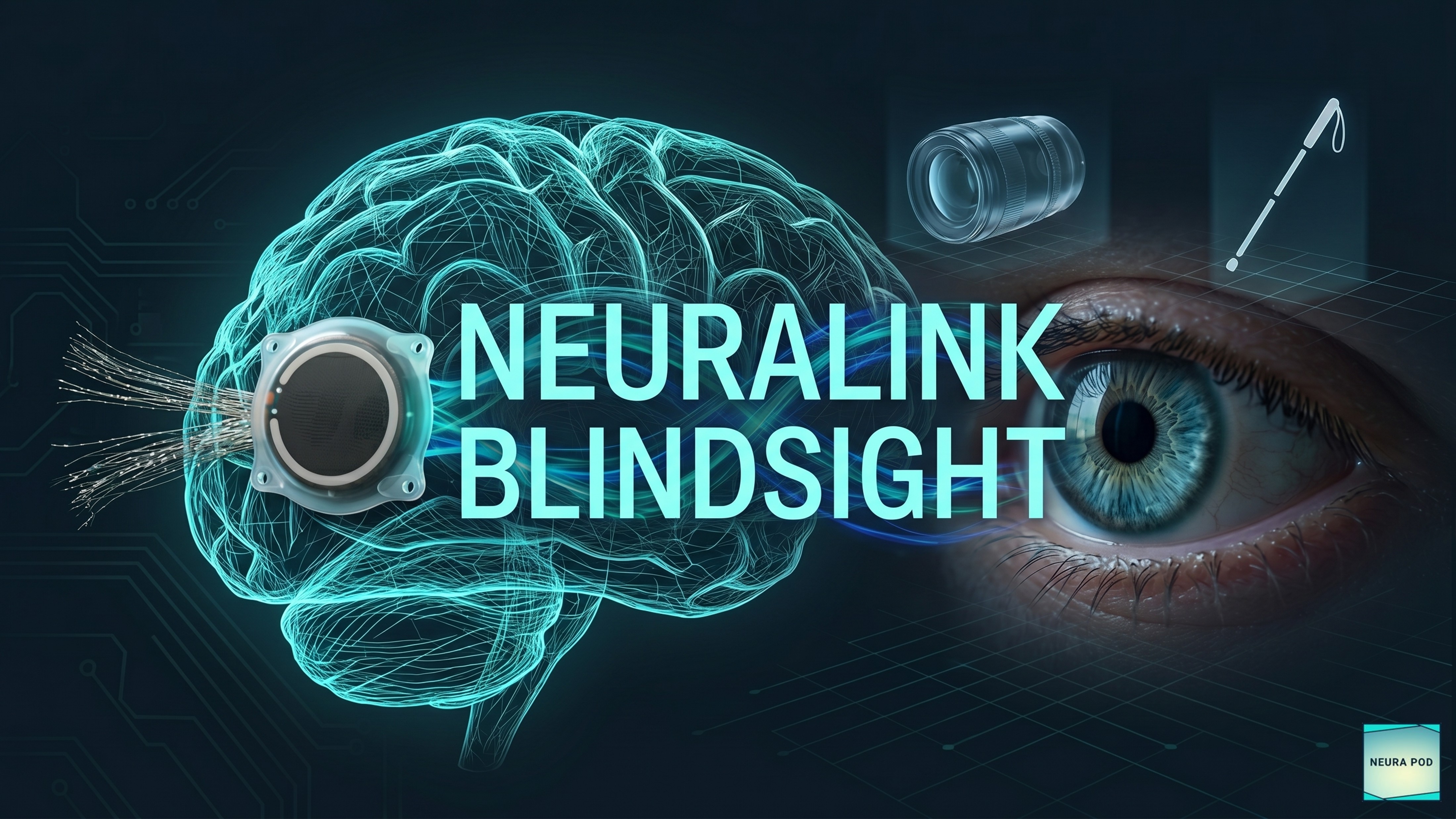
If you enjoyed being updated on Neuralink, click the subscribe button on YouTube or follow button on X, and check out this video to learn more about Neuralink's next Blindsight product to help blind people have some ability to see.
Summary
August 2026 on Neuralink: the careers page overhaul, an official post about Audrey creating art with her mind, a clip from my visit to a speech by Neuralink's first ALS patient, Elon's 2014 Ice Bucket Challenge, why Neuralink matters in the context of Grok Bot, a walkthrough of how a neurosurgeon drills a hole in the skull, and the latest employee count and social metrics, with the patient table still at 27+.