Stroke Recovery and Neuralink: Implications for an Aging Population
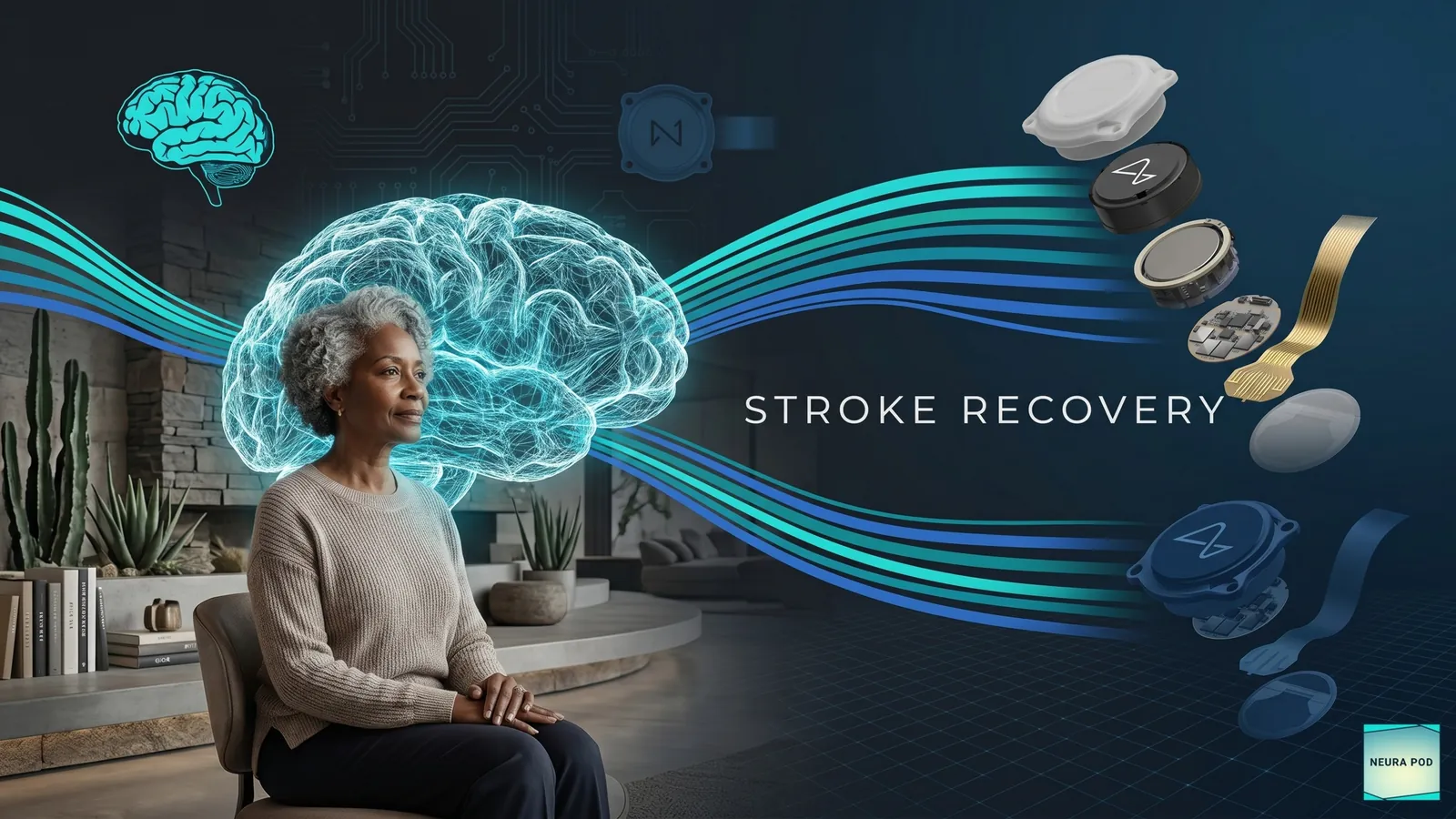
- More than 795,000 people in the United States have a stroke every year, and about 6.3 million Americans are living with the effects of a past stroke.
- Stroke is a leading cause of serious long-term disability, and more than half of survivors age 65 and older are left with reduced mobility.
- The US PRIME trial is for spinal cord injury and ALS, Neuralink's UK and UAE device-control trials include stroke, and the VOICE speech trial lists stroke.
The Neuralink story most people know is a spinal cord injury story. The PRIME study put its first device in a person with a cervical spinal injury, and the follow-on participants living with paralysis or ALS have carried the public narrative ever since. That framing is accurate, and it also hides the larger picture. Counted by people living with severe neurological disability in the United States, stroke dwarfs spinal cord injury, on a scale the trial population does not yet reflect.
How big the stroke population is
Every year in the United States, more than 795,000 people have a stroke. About 610,000 of those are a first or new stroke, and roughly 185,000 are recurrent, which works out to nearly one in four. Put on a clock, that is one stroke somewhere in the country every 40 seconds. Those figures come from the CDC, citing the American Heart Association's Heart Disease and Stroke Statistics.
Incidence is only half of it. Survivors accumulate. A US analysis of the Global Burden of Disease 2021 data puts current stroke prevalence at about 6.3 million people living with the effects of a past stroke (95% uncertainty interval 5.89 to 6.76 million). The CDC describes stroke as a leading cause of serious long-term disability in American adults, and notes that stroke reduces mobility in more than half of survivors age 65 and older.
Globally the numbers are larger again. The Global Burden of Disease 2021 estimates, published in Lancet Neurology, count 11.9 million incident strokes (10.7 to 13.2 million) and 93.8 million people living with the consequences of stroke (89.0 to 99.3 million) in a single year, alongside 7.3 million deaths. Stroke ranks as the fourth most common cause of disability-adjusted life years worldwide. For context on the current Neuralink trial population, US traumatic spinal cord injury runs at about 18,482 new cases a year, with roughly 311,560 people living with it. Stroke creates more new candidates for assistive neurotechnology in a week than spinal cord injury does across a year.
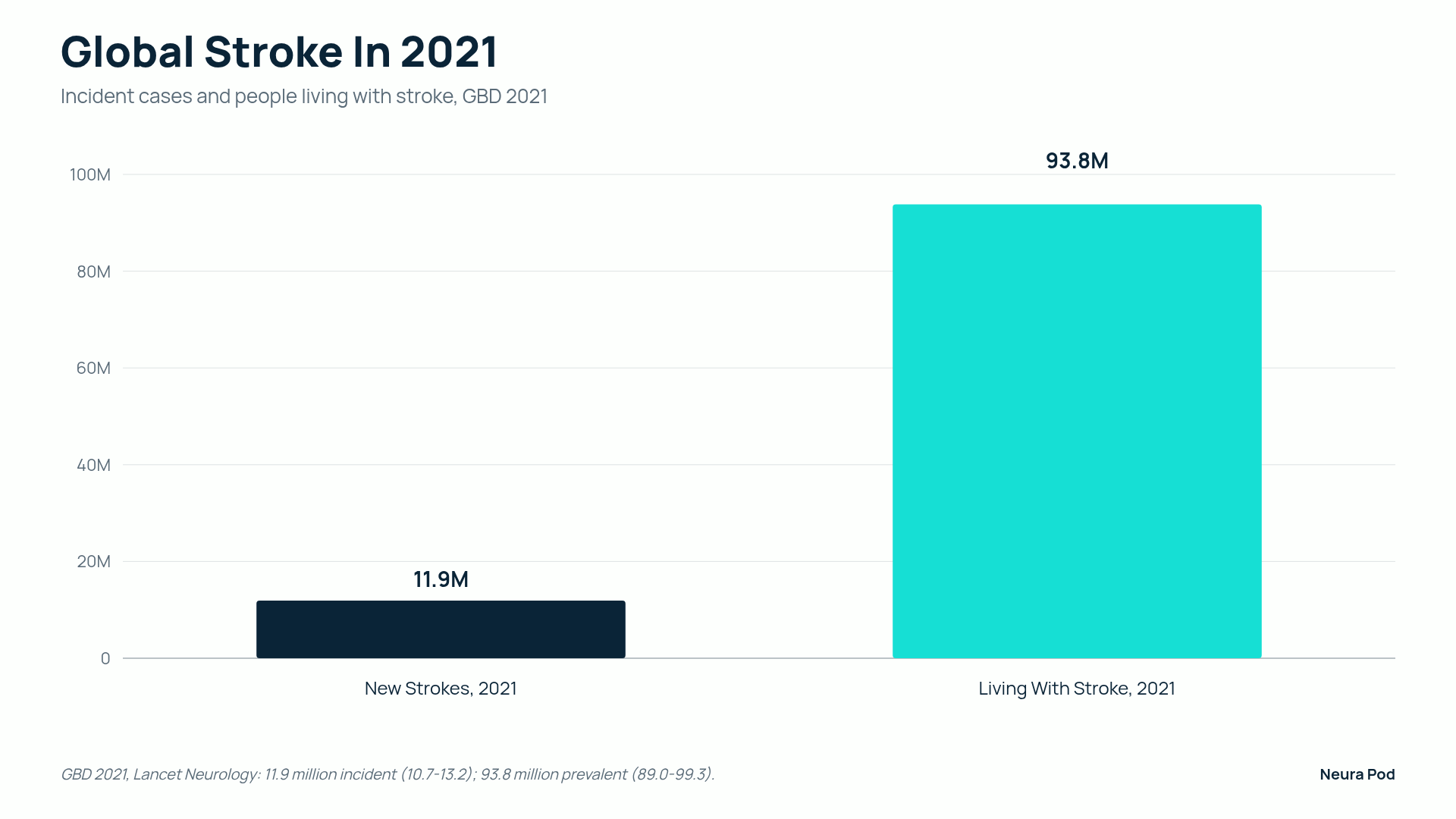
Global stroke in 2021. Source: GBD 2021, Lancet Neurology.
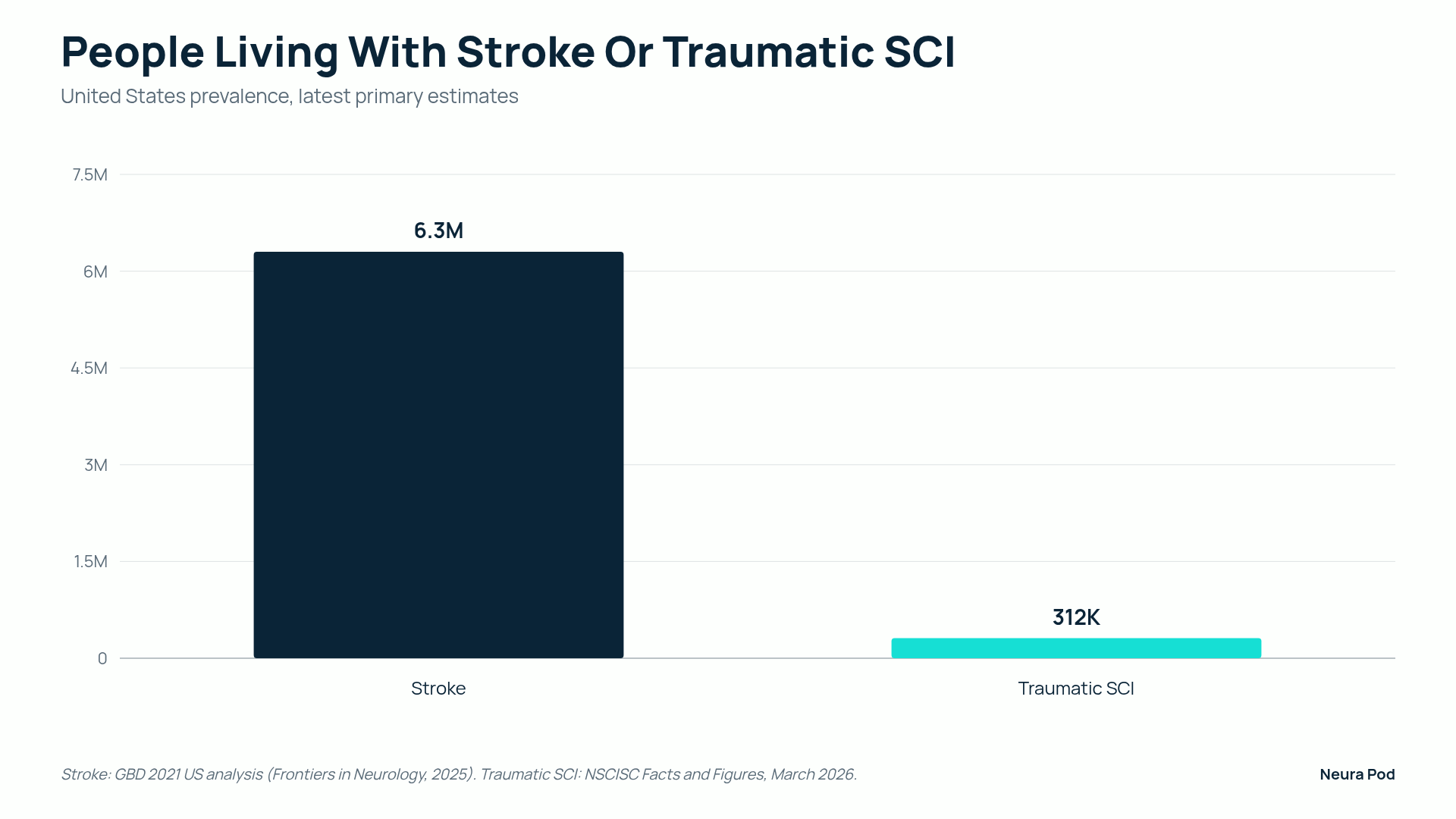
US prevalence, stroke survivors versus people living with traumatic spinal cord injury. Sources: GBD 2021 US analysis (Frontiers in Neurology, 2025) and NSCISC Facts and Figures, 2026.
The aging curve, without the guesswork
Stroke is closely tied to age, which makes it the defining neurological disability story of an aging society. Age-adjusted stroke rates in the US have been drifting down as cardiovascular care improves. Falling rates and rising counts are not a contradiction. When the population over 65 keeps growing, the absolute number of strokes and stroke survivors can climb even as any given person's yearly risk edges lower.
The direction is clear from today's numbers alone. A growing survivor population, most of it older, is exactly the audience that assistive and rehabilitative neurotechnology will eventually have to serve.
Where Neuralink is today
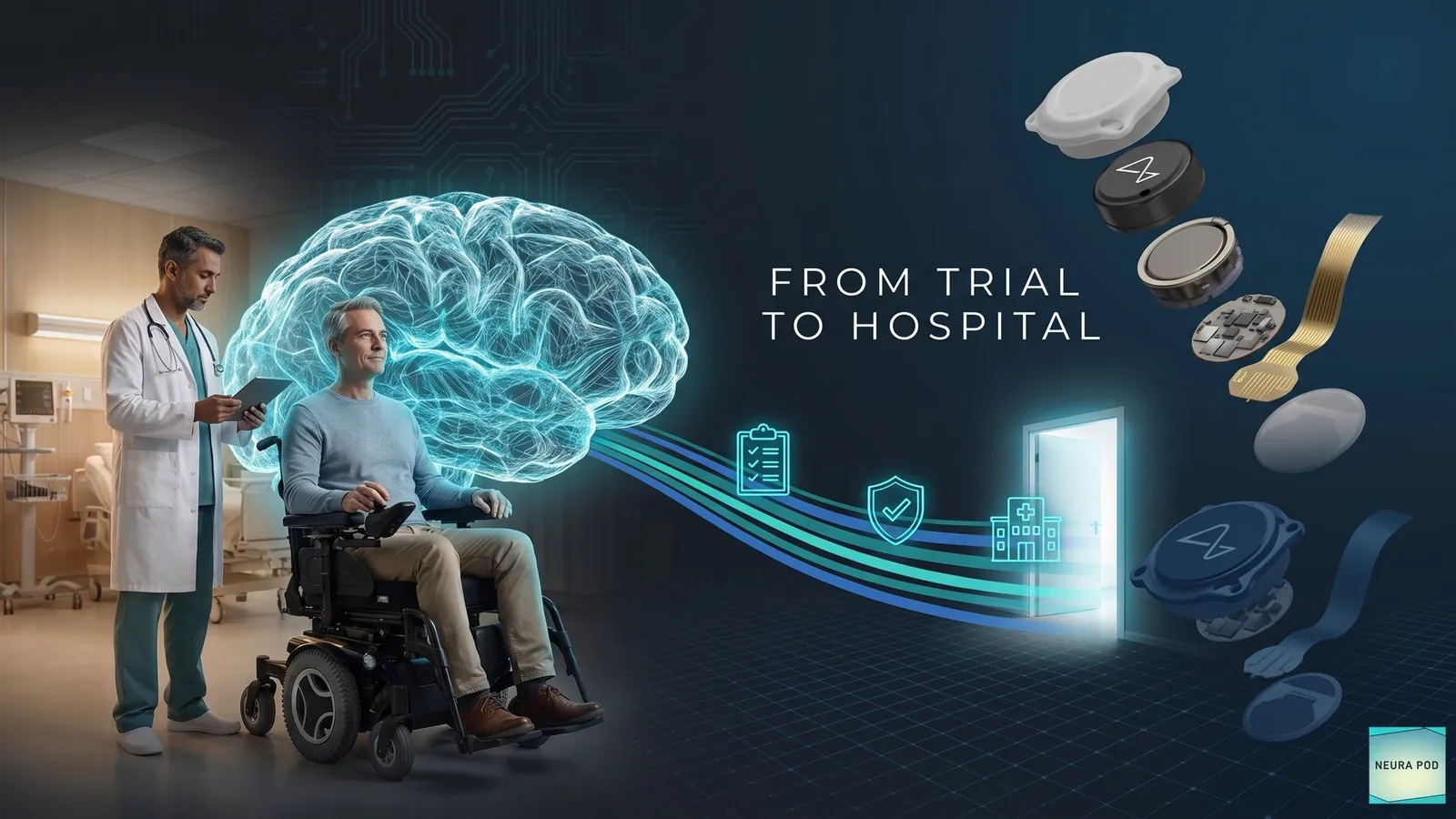
Neuralink is not running a stroke-specific trial. The US PRIME study enrolls people with spinal cord injury or ALS, but Neuralink's device-control trials now also list brain stem stroke on its trials page, and the UK (GB-PRIME) and UAE (UAE-PRIME) studies include stroke in their eligibility criteria. If you have read that a Neuralink stroke patient exists, that is not correct. There is no named stroke recipient.
Stroke does appear in the Neuralink program, though, through a different door. The VOICE speech restoration trial is recruiting, and its eligibility conditions list stroke alongside ALS, primary lateral sclerosis, and spinal cord injury. Neuralink's own framing for the work describes restoring real-time speech for severe speech impairment caused by neurological conditions such as ALS or stroke. The FDA's Breakthrough Device Designation for the speech technology also names stroke among the qualifying conditions. You can read the official trial description on Neuralink's speech restoration page. So stroke is written into the speech trial's eligibility, and brain stem stroke now appears in the device-control trials as well.
There’s more to do, but this provides a glimpse into how Neuralink can help restore independent mobility for people with paralysis.
— Neuralink (@neuralink) July 23, 2026
We covered that wheelchair work in the July 2026 Neuralink Update. Those participants live with paralysis from spinal cord injury or ALS, not stroke. The point is the independence the device is already aiming at, while VOICE is the path that already lists stroke.
Why reading the cortex can still matter after a stroke
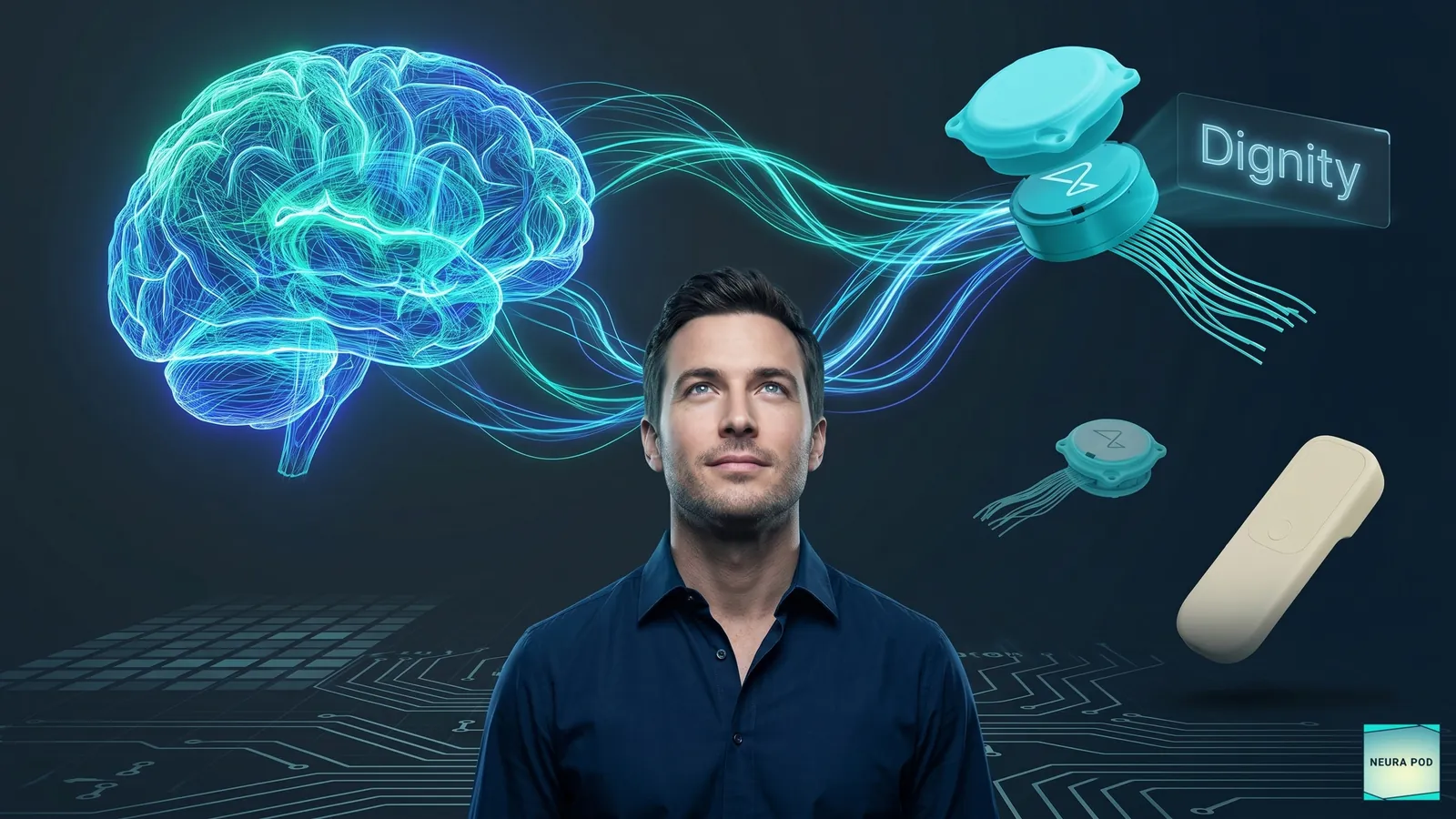
To see why speech is the entry point rather than an accident, it helps to know what the implant actually reads. A Neuralink implant is set into the skull, and its threads reach a few millimeters into the cortex, where they pick up the neural activity of intent: the pattern that fires when a person tries to move a cursor, or tries to speak. Our explainer on how Neuralink works covers the mechanics in more depth.
Stroke damages the brain unevenly. In many survivors, the regions that plan movement and speech are still intact and still firing, while the pathway that carries those signals out to the muscles is what has been cut or degraded. The intent survives, but the output does not. That gap is precisely the situation a cortical interface is built for, because it reads the preserved plan directly rather than depending on the damaged downstream route. The caution here is real and worth keeping in front: this is an investigational device, it is not commercially available, and it is not a cure for stroke or paralysis. The reason speech restoration is a reasonable place for stroke to enter the work is that the underlying signal is often still there to be read.
What the broader research suggests
Outside of Neuralink, academic brain-computer interface research has been working with stroke patients for years, and the results are real even where they are early. Groups have shown that survivors with severe hand impairment can drive BCI-linked devices, and separate speech-BCI studies have restored intelligible communication for people who lost articulate speech. None of that is a Neuralink result, and it would be wrong to present it as one. What it establishes is that the scientific premise, reading intent from surviving cortex after a stroke, is not speculative. Within the Neuralink program, VOICE names stroke and the device-control trials list brain stem stroke, which is the boundary of what the company has committed to so far.
Rehabilitation versus assistance
There are two different futures people tend to blur together. One is assistive: the device stands in for lost function, routing intent to a computer or a speech synthesizer for as long as the person uses it. The other is rehabilitative: the device helps the brain rebuild. Neuroplasticity, the brain's capacity to rewire around damage, drives most meaningful recovery after a stroke, and repeatedly practicing the neural pattern of a movement or a word, even when the external action does not happen, is one theorized way to reinforce surviving pathways. That possibility needs controlled trials before anyone relies on it.
Why volume changes the engineering problem
A stroke-scale indication would reshape what the device and the surgery have to become. A program serving hundreds of thousands of new candidates a year cannot rely on a bespoke, low-throughput procedure. That is the context that makes Neuralink's production and surgical roadmap read as more than ambition.
Neuralink will start high-volume production of brain-computer interface devices and move to a streamlined, almost entirely automated surgical procedure in 2026. Device threads will go through the dura, without the need to remove it. This is a big deal.
— Elon Musk (@elonmusk) December 31, 2025
The current surgical robot is R1, with a next-generation machine, Rev10, described as what comes after it. High-volume production and a more automated implant procedure only start to pay off against a population measured in the millions, which is the stroke and aging picture rather than the spinal cord injury one.
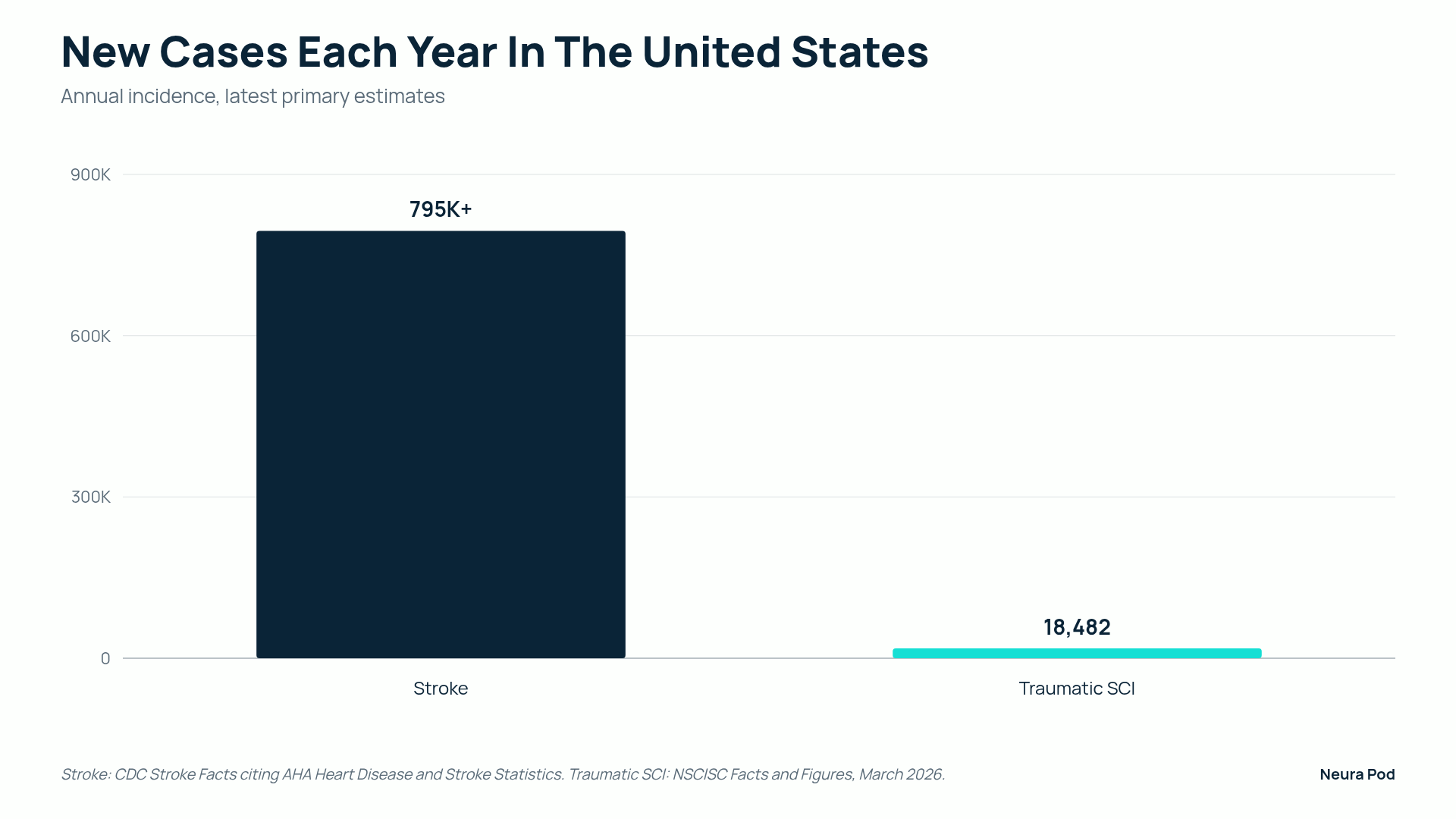
New US cases per year, stroke versus traumatic spinal cord injury. Sources: CDC Stroke Facts (AHA statistics) and NSCISC Facts and Figures, 2026.
The regulatory reality
Breakthrough Device Designation for the speech technology speeds review and signals priority. It does not clear the device for use, and it does not extend automatically to a motor indication in stroke. A stroke trial would carry its own considerations that the current populations do not, including the safety questions around implanting near tissue affected by prior hemorrhage or ischemia. The reasonable expectation is that any first stroke-focused work starts small and highly selected, on stable, chronic patients with preserved cortex in the target regions, long before anything broader.
Driving the chair with my mind was such an exhilarating feeling. The most hope I have felt since my ALS diagnosis.
— Jake Schneider (@PairedWith_P7) July 24, 2026
Summary
Neuralink has no stroke-specific trial, but brain stem stroke is now listed for its device-control trials, and it is not claiming a stroke patient it does not have. What it has is a speech restoration trial that already lists stroke as an eligible condition and a device built to read the kind of intent a stroke often leaves intact. If that describes you or someone in your family, the official VOICE speech restoration page holds the current eligibility and registry information. It is still investigational and still early, and the scale of who it could one day serve is not in doubt.