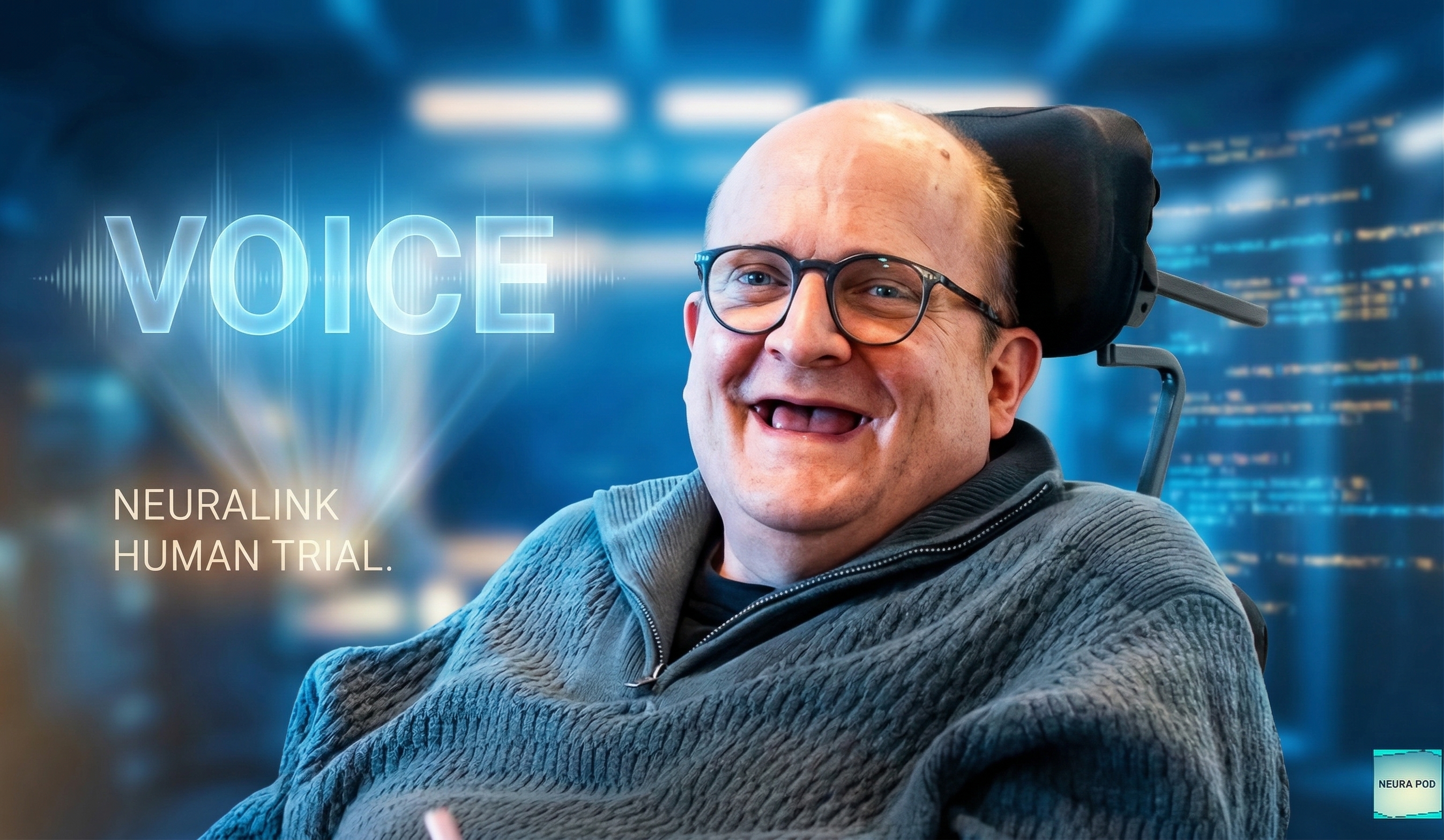
- Neuralink has implanted its brain-computer interface in 20+ patients worldwide as of early 2026.
- Two patients in the VOICE trial demonstrate the technology's potential to restore speech capabilities for individuals with severe impairments.
- This achievement reflects Neuralink's steady global expansion with multiple trials.
Neuralink Patient 21 (P2, VOICE)
The second VOICE trial participant, Kenneth Shock, whose 𝕏 handle is @Cyborg21, received his implant at UT Southwestern in Dallas, Texas. According to his 𝕏 bio, he is originally from Spokane, Washington, and now residing in Alberta, Canada. Shock is a former medical professional diagnosed with upper motor neuron dominant ALS in 2023, though he suspects symptoms began 10 to 15 years earlier.
As a graduate of the ALS Canada CALI 2025 program, he has expressed strong enthusiasm for the technology, stating, "ALS is a ruthless, soul-crushing bastard that kicks you when you're down, but @Neuralink? That's the middle finger we're finally flipping back at it."
One early example of related functionality is seen in participant Brad, who uses his implant for text-to-speech, though VOICE advances this by bypassing intermediaries like keyboards. The FDA granted Breakthrough Device Designation for this speech restoration technology in mid-2025, expediting its development. This trial builds on Neuralink's CONVOY study, which explores control of robotic arms, showing the company's layered approach to restoring autonomy.
Neuralink's Current Implant Milestones
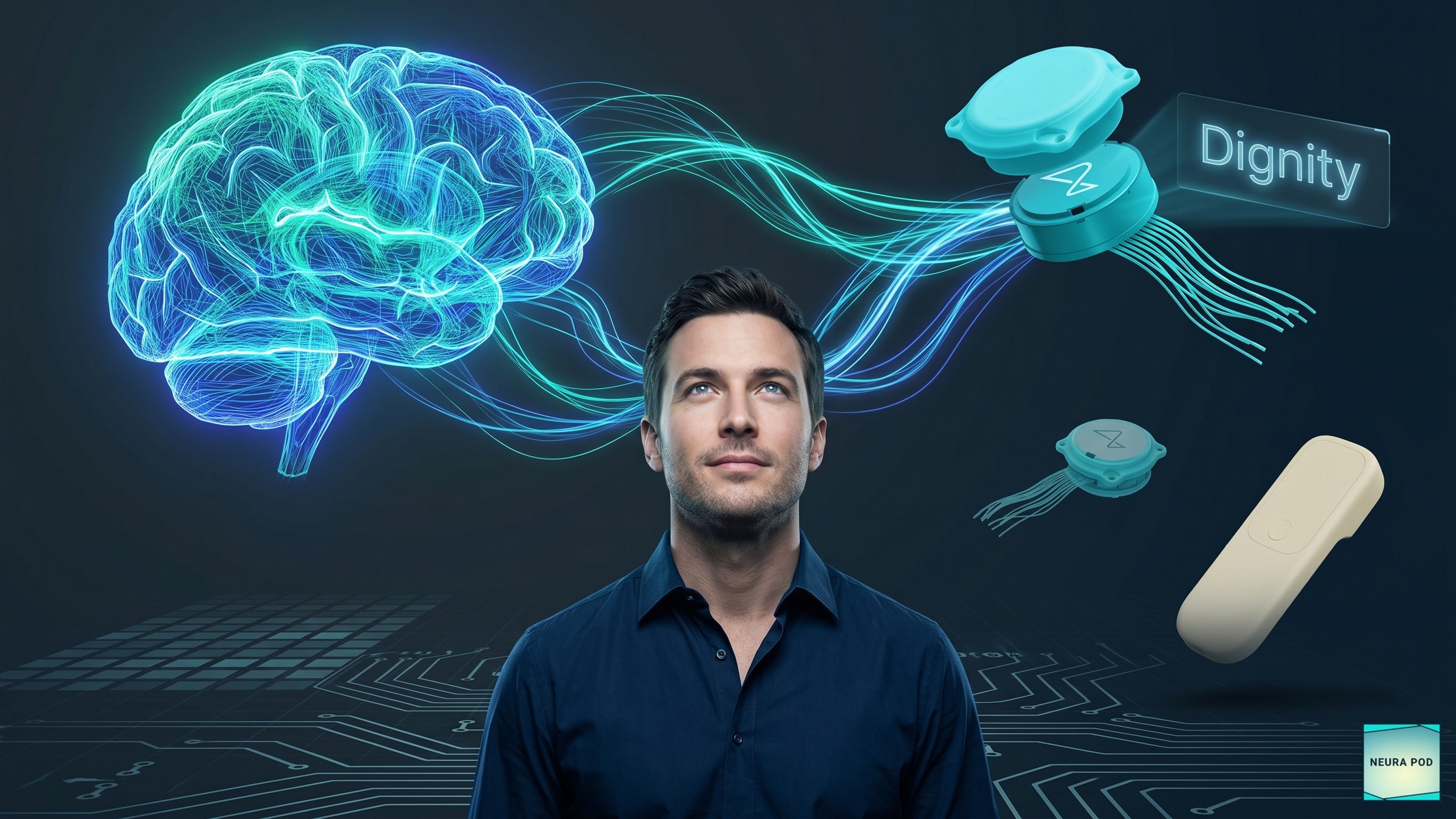
Neuralink has made significant strides in its human trials, reaching at least 21 successful implants by January 2026. The company began its PRIME study in 2024, focusing on individuals with quadriplegia from spinal cord injuries or ALS. Initial implants started with a small number of participants, but the pace accelerated throughout 2025. With ongoing procedures in early 2026, the total has surpassed 20, incorporating international sites in Canada and the UK. These implants involve the Telepathy device, which uses 128 ultra-thin threads to record neural signals, enabling users to interact with computers and control assistive robotic arms.
Understanding the VOICE Trial
The VOICE trial represents a specialized branch of Neuralink's research, aimed at translating thoughts directly into speech for those with severe speech impairments. Unlike earlier implants focused on cursor control or basic communication via on-screen keyboards, VOICE targets the speech motor cortex to enable seamless voice output. As of January 2026, at least two patients have been implanted under this trial, marking an important step toward broader applications.
The trial, officially titled "VOICE: An Early Feasibility Study of a Precise Robotically Implanted Brain-Computer Interface for Communication Restoration," is recruiting participants and focuses on adults aged 22 to 75 with severe speech impairment and impaired upper limb function due to conditions like ALS, primary lateral sclerosis, stroke, or spinal cord injury. It requires participants to have a life expectancy of at least 12 months, the ability to communicate in English, and a stable caregiver. The study excludes those with high risks for surgery, such as morbid obesity, uncontrolled seizures, or certain psychiatric disorders.

Conducted at The University of Texas Southwestern Medical Center in Dallas, Texas, the trial started on October 3, 2025, with an estimated enrollment of six participants and primary completion expected in October 2028. The interventions include the N1 Implant, a skull-mounted wireless rechargeable device connected to electrode threads, and the R1 Robot for precise implantation.
Primary outcomes measure the proportion of device-related and procedure-related adverse events at 12 months, while secondary outcomes track long-term safety up to 48 months and efficacy through metrics like electrode insertion success and words per minute in brain-computer interface performance for speech.
Patient Outcomes and Benefits
Patients with Neuralink implants report improved quality of life through enhanced interaction with technology. For instance, early participants have used the device for over 5,000 hours combined, playing games, browsing the internet, and controlling cursors. In the VOICE trial, the two implanted individuals are exploring direct thought-to-voice capabilities, which could allow faster communication compared to traditional assistive devices.
Overall, the 21 patients span conditions like paralysis, ALS, locked-in syndrome, and MS, with implants providing data on long-term stability and efficacy. Neuralink's upgrades, such as doubling threads to 128 and reducing insertion time to 1.5 seconds, have addressed early issues like thread retraction, leading to better performance. These outcomes underscore the technology's potential to help millions with unmet medical needs.
Expansion Plans and Innovations
Neuralink's growth includes international trials and automated surgical advancements. Elon Musk announced plans for high-volume production and fully automated procedures by late 2026, aiming for thousands of implants annually. The company raised $650 million in 2025, valuing it at around $9 billion, to support this scaling.
Future milestones include the Blindsight implant for vision restoration, set for trials later this year. With patients around the world logging double-digit hours of use daily, Neuralink is positioning itself for FDA approvals and wider accessibility.
Summary
Neuralink has implanted its brain-computer interface in at least 24 patients by May 2026, including two in the VOICE trial focused on speech restoration. This progress, driven by Elon Musk's vision, includes international expansions and technological upgrades for better stability.
The VOICE trial, recruiting at The University of Texas Southwestern Medical Center, features participants like Kenneth Shock, a Canadian resident with ALS who received the first implant there and highlights the study's aim to enable communication for those with severe impairments.
Patients are gaining autonomy in daily tasks, with collective usage exceeding thousands of hours. Looking ahead, automated surgeries and high-volume production in 2026 promise transformative impacts for those with paralysis and other conditions, highlighting Neuralink's optimistic trajectory in brain implant advancements.