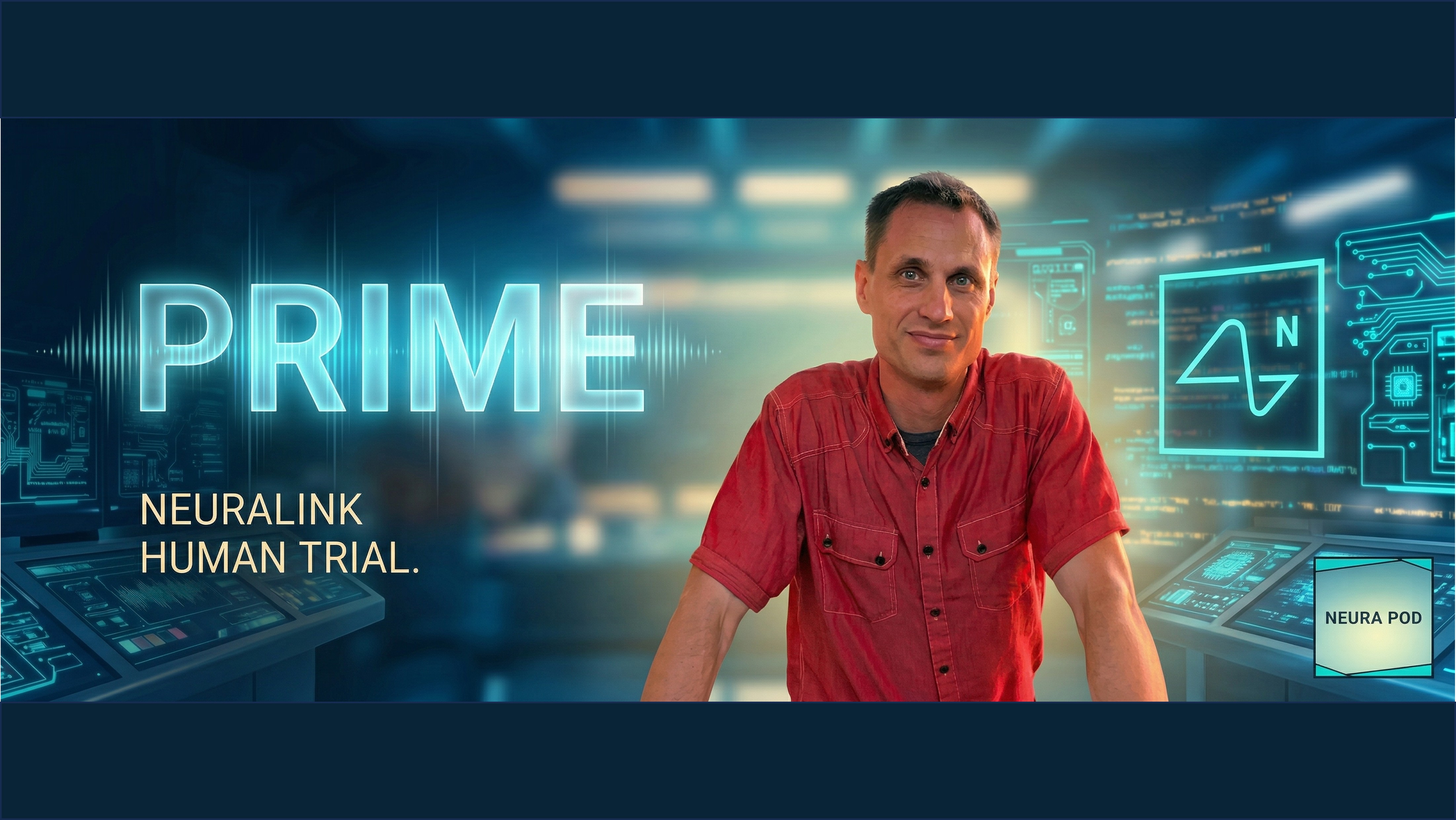
Patients 23 and 24 received the N1 brain-computer interface on the same day, in mid-March. In April, P25 was the third participant worldwide to join the VOICE Trial, while P26 received the first "thru-dura" surgical approach in May. The Canadian hospital site debuted this new surgical technique that pierces through the dura mater instead of removing it, likely reducing infection risk, aligning well with Elon Musk's relentless "delete unnecessary parts" engineering philosophy.
- Neuralink has now successfully implanted its N1 Link device in 27 human patients worldwide, accelerating their expansion around the world.
- CJ’s procedure in Miami was observed by Erika Ross Ellison, Neuralink’s brand-new Head of Clinical, whose patient-centered leadership has boosted confidence within the paralysis community.
- A former professional CAD drafter and entrepreneur whose dream business launched and was shattered in a single devastating afternoon, he is already working closely with Neuralink BCI engineers on restoring CAD capabilities through mind control.
Neuralink Patient 24, CJ (@SCI_Borg24 on 𝕏), has officially joined the elite group of N1 "neuralnauts." As a spinal cord injury survivor, passionate architecture enthusiast, and world traveller, CJ is already sharing his post-implant journey publicly with humor, gratitude, and quiet optimism.
This worldwide community of Neuralink recipients includes Noland Arbaugh (the first patient), Audrey Crews (the first woman with a Neuralink), and UK pioneers Paul and Jon Noble. Fellow Miami-implanted patients include RJ Tanner, Nick Wray, and Audrey Crews. You can see details of publicly known patients on our patient table or browse full patient profiles.
In response to online negativity regarding Neuralink, CJ demonstrated his resilience writing this on 𝕏:
"I embrace the cyborg title… Let me take a wild guess that the media hacks… didn’t ask a single one of us 24 Neuralink patients about our experiences."Who Is CJ? From Minnesota Roots to a Shattered Entrepreneurial Dream
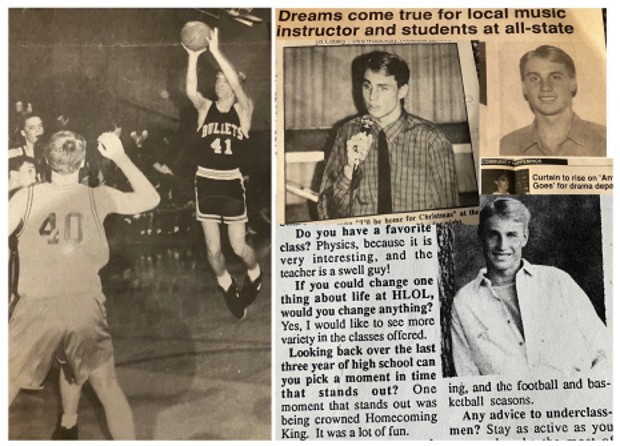
CJ grew up in Minnesota, where he was active and lived a "normal," great lifestyle. He played football, basketball, and baseball, performed in choir and theater, and pursued a diverse education that blended creativity and technical skill. He received certification in CAD, bachelor’s degree in Geography, and a master’s in Global & Contextual Studies.
Professionally, he built a successful career implementing architectural CAD software (specifically Revit), for a mechanical and electrical design-build company specializing in commercial construction. He loved turning complex blueprints into reality, helping bring buildings to life one precise digital line at a time. Little did he know, it would one day take a surgically implanted Neuralink device to get this ability back.
After years of careful planning, blood, sweat, and tears, CJ finally took the leap and launched his own independent CAD business. His very first client was a local hospital that needed a redesign. On the morning of his accident, he visited the site, full of excitement and possibility. Five hours later, everything changed forever.
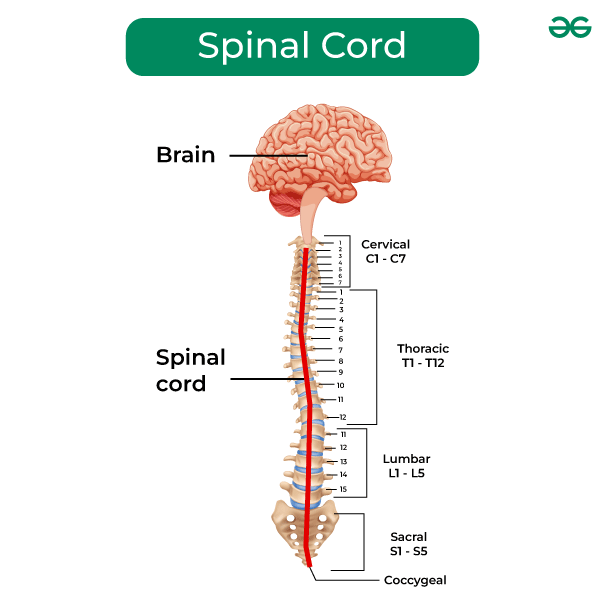
In June 2020, while trimming a tree in his front yard, a massive 300-pound branch broke loose. It knocked him out of the tree and landed directly on him. CJ actually coded (went into cardiac arrest) by the time EMS arrived (delayed by COVID protocols), but paramedics resuscitated him. What followed was a nightmare of medical complications: an initial emergency surgery at one hospital, a failed spinal fusion due to hardware collapse (exacerbated by the ICU’s refusal to use a proper cervical collar), and a corrective surgery at Craig Hospital (Swedish Hospital) in Colorado. What began as a C3-C5 incomplete injury became a C2 complete spinal cord injury, leaving him with nearly 100% loss of bodily function and ventilator-dependent.
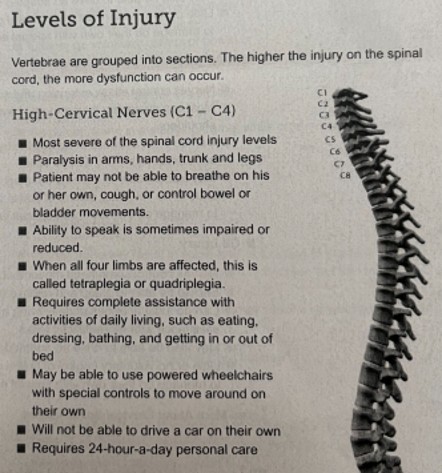
The dream he had worked so hard to build was gone in an instant, along with the active, adventurous life he and his wife had built together.
The Love Story That Powers Everything: 20 Years of Adventure, Architecture, and Unbreakable Partnership
Through it all, CJ’s wife has been his rock, his soulmate of nearly two decades. This July 30 will mark exactly 20 years since their first date. Tune in to Neura Pod for an exclusive interview with the couple to commemorate that day. Together they’ve lived a life most people only dream about: spontaneous Sunday road trips after church, chasing sunsets, exploring new cities, and diving deep into architecture and culture.
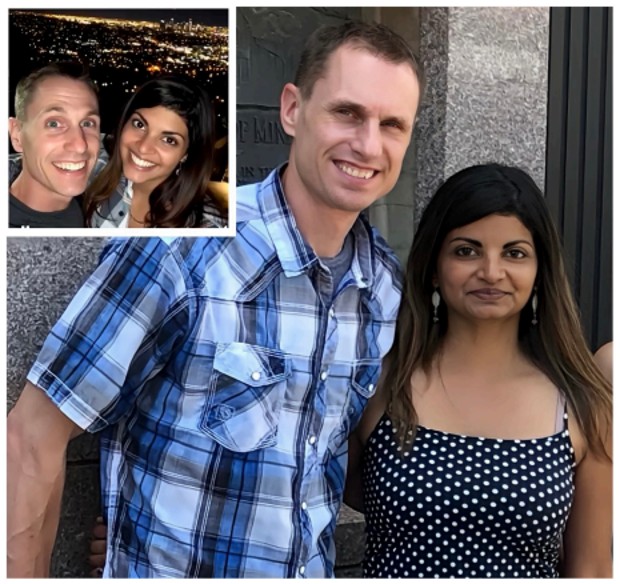
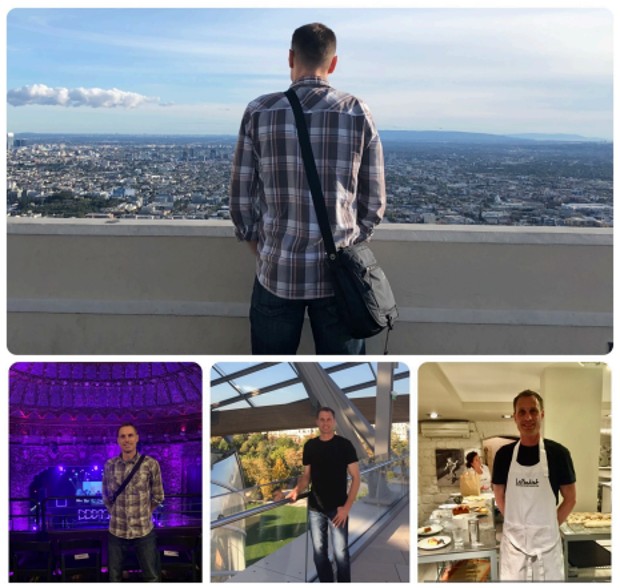
CJ describes their shared passions vividly: “We have enjoyed traveling, learning, and adventuring together, and it is these things we miss most since my accident.” They would hop in the car and surprise each other with unique activities: winery visits, stargazing through telescopes at Griffith Observatory, touring Frank Lloyd Wright masterpieces, or taking educational deep dives into museums and historic sites.
Their travels took them across the globe. One unforgettable trip to Los Angeles included gazing at the stars from Griffith Observatory, standing under the Hollywood sign at night (even if it wasn’t lit up), visiting the Getty Museum, the Walt Disney Concert Hall, and even attending Hillsong Church LA.
CJ’s wife holds a PhD in Biochemistry, Molecular Biology, and Biophysics. She immigrated to America with her family at just three years old. Her grandfather was an illiterate farmer who never attended school. Her father grew up without shoes, electricity, or running water, yet he fought his way into both medical school and engineering school, bringing his entire family to the United States. Every member of her family is now an engineer or in a STEM field. CJ often speaks with awe about their incredible work ethic:
“I never met a more hardworking family in my life, and that work ethic prepared her for the incredibly difficult and sacrificial life she now lives to take care of me with my severe disability.”
When CJ was injured, she walked away from her own distinguished career as a tenured professor and principal scientist at Abbott to become his full-time caregiver. She has been by his side through every challenge, every hospital stay, and every air-ambulance flight (which, because CJ is ventilator-dependent, must be specially retrofitted Lear jets costing tens of thousands of dollars one way, complete with pilots, paramedics, a flight nurse, and a respiratory therapist). As CJ recalls, as they were boarded onto yet another air ambulance, he apologized to her for ruining her life with his accident. "She joked with deep affection, ‘No way! I’ve never flown in so many Learjets in my life!’”
Her support has been unwavering. When CJ was deciding on Neuralink, she dove deep into the research and watched countless videos and interviews. CJ told me:
"It was your page that helped me make my decision. I watched many videos and interviews and shared them with my wife… She said that your Neura Pod information was equally helpful in making this decision. So, thank you!”
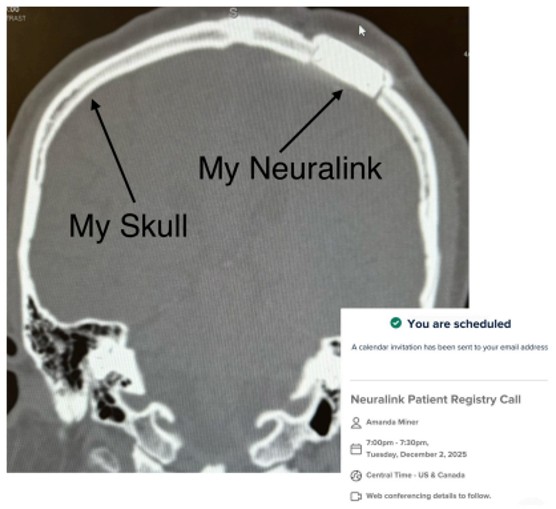
Upon submitting CJ’s information to Neuralink’s Patient Registry, he was contacted immediately for a screening interview. He passed, with the interviewer telling him they were very excited to read he was a professional CAD drafter. At the next interview, however, CJ was concerned to hear that the main goal was to move a computer cursor to increase typing speed, something he was already successfully doing with Voice Control technology. He had recently been contacted by the inventor of one of Time Magazine 2024 Top 100 Inventions, who branded themselves the “Noninvasive Neuralink.”
They asked him to pause his pursuit of Neuralink to give them the chance to develop a prototype for him that “could do everything the BCI can do, but without brain surgery.” CJ gave them the chance, but found it very ineffective, both on the WebGrid site developed by Neuralink, and in real-world usage with Revit. His wife then revisited the Neuralink Registry to change their response from “Not Interested” to “Interested.” Within 24 hours, CJ was invited back to interview, and within a few months, had the N1 implanted and was working with Neuralink engineers to gain functionality with Revit!
Surgical Breakthrough: First Dura-Preserving Procedure
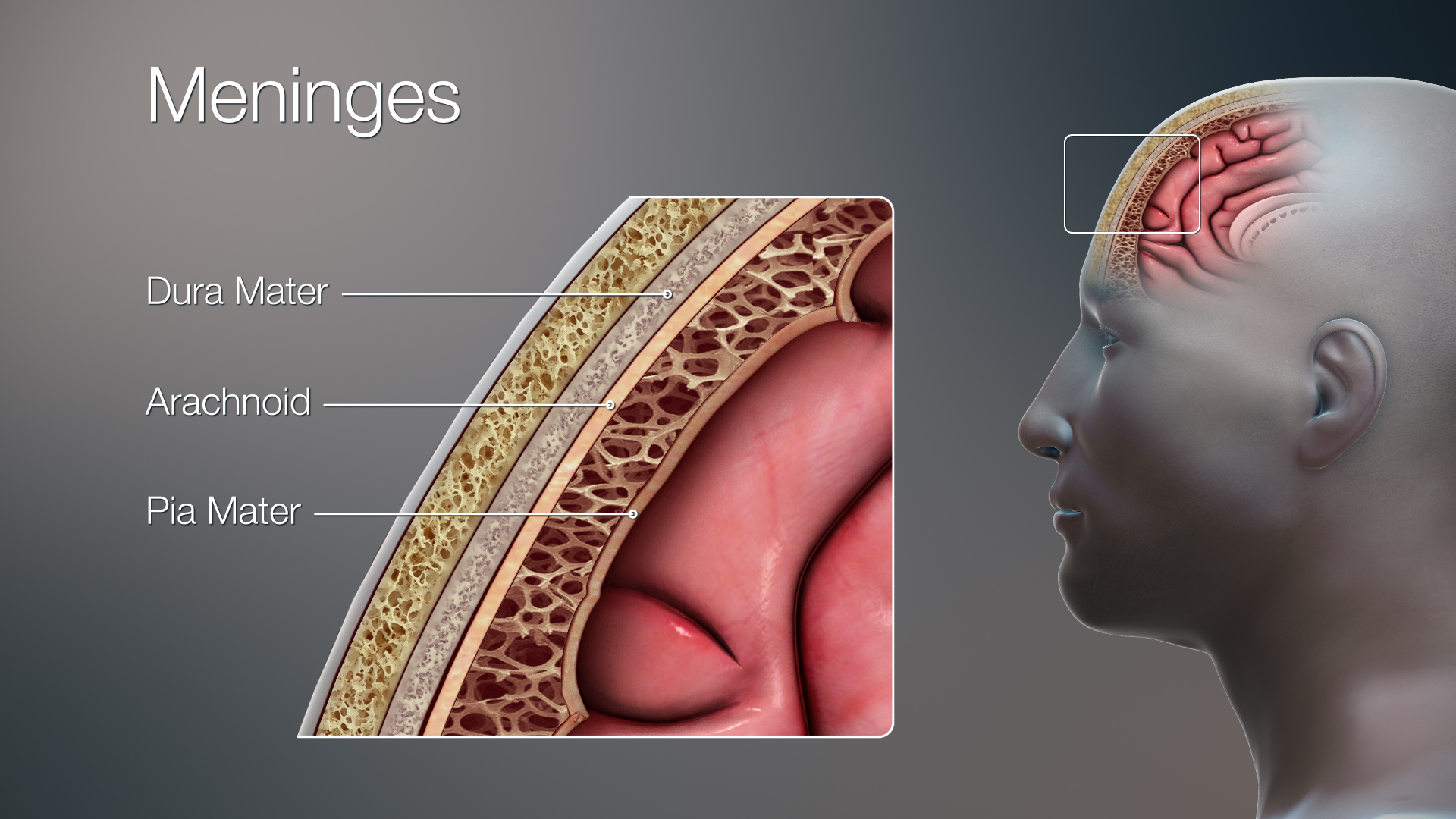
The Canadian Neuralink hospital site was officially approved for the company’s newest procedural advancement: implanting the N1 electrode threads through the dura mater rather than cutting and removing it. This less invasive technique is expected to reduce infection risk, minimize complications, and shorten recovery time. It represents yet another example of Elon Musk’s signature engineering philosophy: relentlessly reduce and delete unnecessary parts and processes until only what is essential remains. Removing the dura has been standard in prior procedures; piercing through it instead simplifies the surgery while preserving the brain’s natural protective layers.
The Neuralink team has stated the dura mater has the texture similar to that of an orange peel. Underneath is extremely soft and squishy brain tissue, with a texture similar to Jell-O. Inserting the metal electrode threads through the dura is not only one less potential complication, but it should also hold the threads in place better and prevent thread retraction.
CJ’s surgery took place at the Miami Project to Cure Paralysis in Florida (he currently lives in Florida after moving for better care access). His procedure was observed by Erika Ross Ellison, Neuralink’s new Head of Clinical.

A biomedical engineer with an impressive background that includes leadership roles at IEEE EMBS and advisory positions at Johns Hopkins, Columbia, and the NIH, Erika has quickly become a key figure in the PRIME study and related trials.
CJ’s wife, who has been in close contact with Neuralink leadership throughout the process, met with Erika multiple times. She came away with more confidence in the company than ever before:
“Erika understands that the goal of people living with paralysis is to move again.”
That patient-first mindset has been incredibly reassuring for families navigating the uncertainties of cutting-edge BCI technology.
One Month Post-Op: Early Progress, CAD Dreams, and Renewed Hope
CJ recently completed his 30-day follow-up visit in Miami, where everything was progressing well: the surgery site healed beautifully. He has already begun using the device for mind-controlled cursor movement and is working closely with Neuralink BCI engineers on calibration and real-time optimization.
He even gave us an early glimpse of his real-time neural signals firing on the device:
The Neuralink team is particularly excited about CJ’s professional background. As a trained CAD professional with years of experience implementing Revit for commercial construction projects, he represents a perfect test case for restoring high-precision, knowledge-work capabilities. CJ told me:
“I had a pretty exhausting meeting tonight with Sehej (who is awesome). Neuralink is so excited that I’m a professional drafter that they are really trying to get me back up and running on CAD software with my implant. Very tiring so far.”
From someone who lost his newly launched CAD business in the same afternoon it began, this progress carries profound meaning. “From working with Sehej and the team,” CJ shared, “I believe it may be possible to return to work with my Neuralink.” That ambition echoes Alex Conley’s public CAD demonstrations and other Neuralink patient accomplishments in restoring real-world capabilities.
The couple has also stayed connected with the broader Neuralink community. CJ confirmed that he is indeed Patient 24 out of 27 worldwide participants, and as of July 7, the group has met three times for Cyborg-Only online events.
What This Means for Neuralink, for CJ, and for the Future of Paralysis Treatment
With CJ’s implant, Neuralink has reached (and subsequently surpassed) 2 dozen patients implanted with the N1 brain-computer interface. The pace of expansion is accelerating. What began as a single U.S.-based trial has now spread to Canada, the UK, and continues to scale globally.
Neuralink’s relentless drive to simplify, strengthen, and scale is exemplified by these recent procedures. The new dura-piercing surgical technique eliminates an entire step that was previously required.
Neuralink has moved past simply moving a cursor on a computer screen, and is now actively working with participants to help them interact with the real world. Participants in the CONVOY sub-study are working on thought-controlled robotic arm movement, as shown in this vivid demonstration:
And for CJ, personally, he told me: “The most important thing to me is being able to use my N1 to control my wheelchair.” Neuralink recently debuted this exciting video, showcasing that technology:
These advancements are already delivering hope. When CJ was one month post-op, he was actively working with Neuralink BCI engineers. He shared: “Based on my preliminary success, I’ve already been contacted by people interested in hiring me to return to a Revit career using my N1.” For a man whose dream business launched and was destroyed in the same five-hour window, the possibility of returning to the work he loves: designing and implementing architectural projects, is profoundly meaningful.
Beyond work, CJ and his wife dream of reclaiming the adventurous life they built over nearly 20 years: spontaneous road trips, global travel, architecture tours, and educational experiences from Paris baking classes to Griffith Observatory stargazing. Both CJ and his wife speak with deep gratitude about the support they’ve received. They continued with discussion of how Neuralink is giving them reason to believe those adventures may one day be possible again without such extraordinary logistics. Between the two of them, they have lived in or visited over two dozen countries and six of the seven continents. With Neuralink, perhaps they can get to the seventh!
Sobering Update
CJ Shared this in an 𝕏 post recently:
I faced death last week twice. As a ventilator-dependent quadriplegic, I live a life that makes quadriplegia look easy by comparison. As a C2-C5 quad, 90% of the struggles I face with my health are due to my ventilator-dependence, and not the rest of my paralysis. I often tell my wife that, if I didn’t have respiratory failure, she would have a nearly normal life. Instead, her days are consumed with breathing treatments, cough assists, and on several occasions, saving my life. Many days, her “alarm clock” is the alarm on my ventilator or my pulse-oximeter machine, alerting her that I am losing my life. She has become accustomed to flying out of bed in the middle of the night to grab the ambu-bag with one hand and the phone with the other to call 911 while she resuscitates me.
We took a 1800-mile road trip last week. Somewhere in the middle of Tennessee, I stopped breathing. My wife pulled over to a gas station and started forcing air into my lungs with an ambu-bag. My mother-in-law called 911 and my father-in-law ran into the station to get their address. When the ambulance arrived, we found out they did not carry the necessary equipment to clear my lungs; in fact they had nothing beyond what my wife had in our van. They also had no way to transfer me from my wheelchair into the ambulance. They don’t carry basic slings or transfer equipment for quadriplegics.
My mother-in-law prayed while my wife performed cough-assist and my father-in-law drove us to the nearest ER. There, they had no idea how to ventilate a spinal cord patient. All of their protocols are for people with respiratory failure due to unhealthy lungs, not due to diaphragm paralysis. In a room full of physicians, nurses, and respiratory therapists, I began to crash. I desaturated (my blood oxygen dropped) to 56%. Anything below 91% is considered dangerous. Below 85% is life-threatening.
The staff stood and stared. My wife pushed them aside to perform all of the life-saving techniques she had learned from Justin Walter and Brigitte Trace at Craig Hospital. Through her incredible skills and the grace of God, I began to breathe again. The RTs were stunned and said they had never seen anyone survive below 65%. They didn’t have a pulmonologist who could evaluate why this happened because “he’s not working today.” The world is not designed to treat the most vulnerable among us.
Quadriplegics, and especially those of us with respiratory failure, are supposed to remain invisible. My home care team is at the Mayo Clinic in Rochester, the #1 hospital in the world for 36 years in a row. Yet, we are excluded from every Clinical Trial, every experimental therapy, every early intervention. Except now. Except Neuralink. Except Elon Musk. Thank you, @elonmusk and @shivon for seeing those of us who have been invisible, too risky, too much of a liability. I promise to do better at staying alive.
Summary
Neuralink has implanted its 24th patient. CJ (@SCI_Borg24), a former CAD professional and passionate traveler from Minnesota (now based in Florida). He and Patient 23 were implanted on the same day, with CJ’s procedure at the Miami Project observed by new Head of Clinical, Erika Ross. The Canadian site simultaneously debuted the new dura-piercing surgical technique, reducing risk and complexity in line with Elon Musk’s “delete unnecessary steps” philosophy.
A devastating 2020 tree-trimming accident left CJ with a C2 complete spinal cord injury just hours after landing his first client for his newly launched CAD business. Supported by his soulmate of nearly 20 years (a PhD scientist who became his full-time caregiver), CJ is nearly 5 months post-op as of mid-July 2026, progressing well, and already collaborating with Neuralink engineers on refining his ability to do mind-controlled CAD work. He and his wife believe Neuralink may one day not only restore function, but also the adventurous life they miss so deeply.
Continue Exploring
- Neuralink FAQ: straight answers about safety, surgery, cost, eligibility, and the PRIME study.
- Patient accomplishments: what Neuralink patients have actually done with their implants so far.
And if you’d like to follow CJ directly, his updates appear on 𝕏 at @SCI_Borg24.